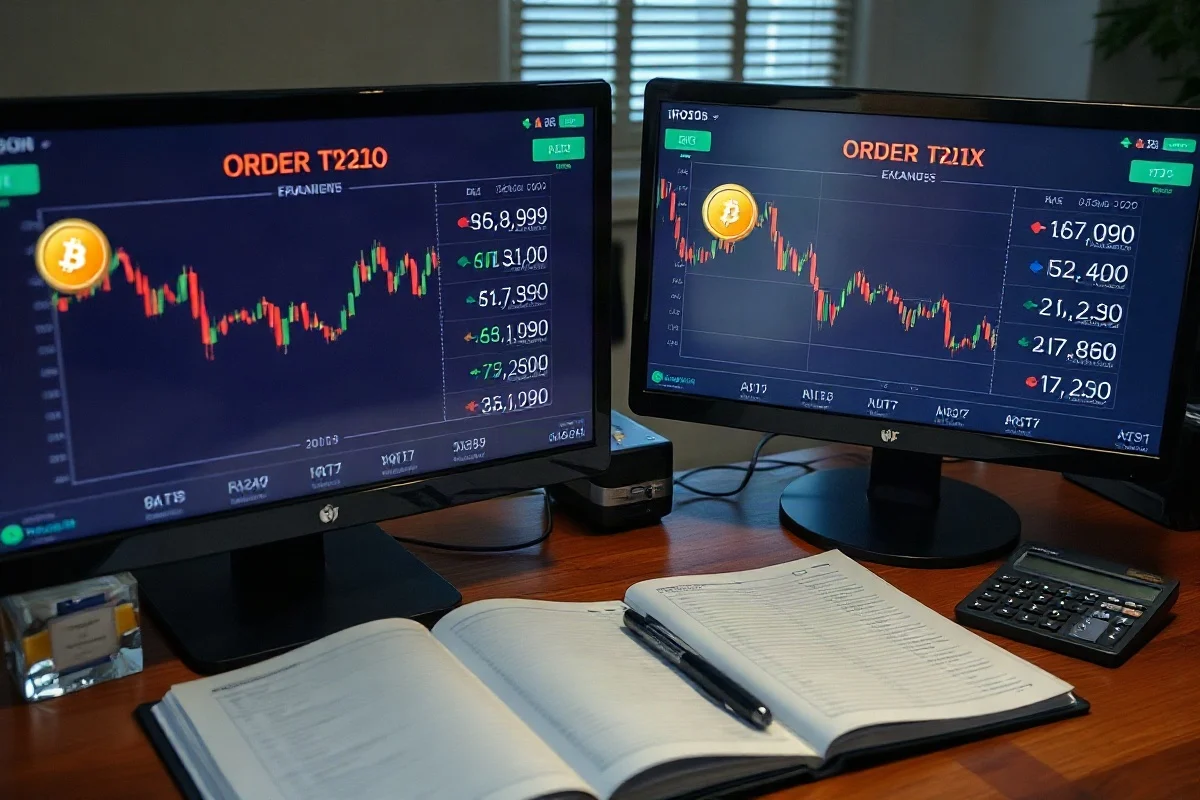
Crypto prices can differ between exchanges because each platform has a separate marketplace with its own buyers, sellers, order book, liquidity, trading volume, fees, and pricing data. Unlike a single centralized stock exchange, crypto markets operate across many venues at the same time. Small differences are normal, while unusually large gaps may reflect low liquidity, delayed data, withdrawal restrictions, or temporary market stress.
Understanding these differences matters when you compare a coin’s value, calculate a potential profit, or decide where to trade. A displayed price is not always the same as the price you can actually receive for your specific order. For a more realistic comparison, consider the available order-book depth, spread, trading fee, withdrawal cost, network conditions, and the time at which each price was recorded.
Each exchange has its own market
An exchange does not usually receive one universal price and apply it to every user. Instead, it matches buy and sell orders submitted by participants on that platform. The most recent completed trade becomes a commonly displayed market price, but that trade may have occurred at a different level from the best currently available buy or sell order.
For example, one exchange may have many active buyers near a particular price, while another may have more sellers or fewer participants. Their order books can therefore settle at different levels. The difference may narrow when traders take advantage of the gap, but it does not necessarily disappear immediately because moving funds between platforms involves costs, delays, account limits, and operational risks.
Order books, bid prices, and ask prices
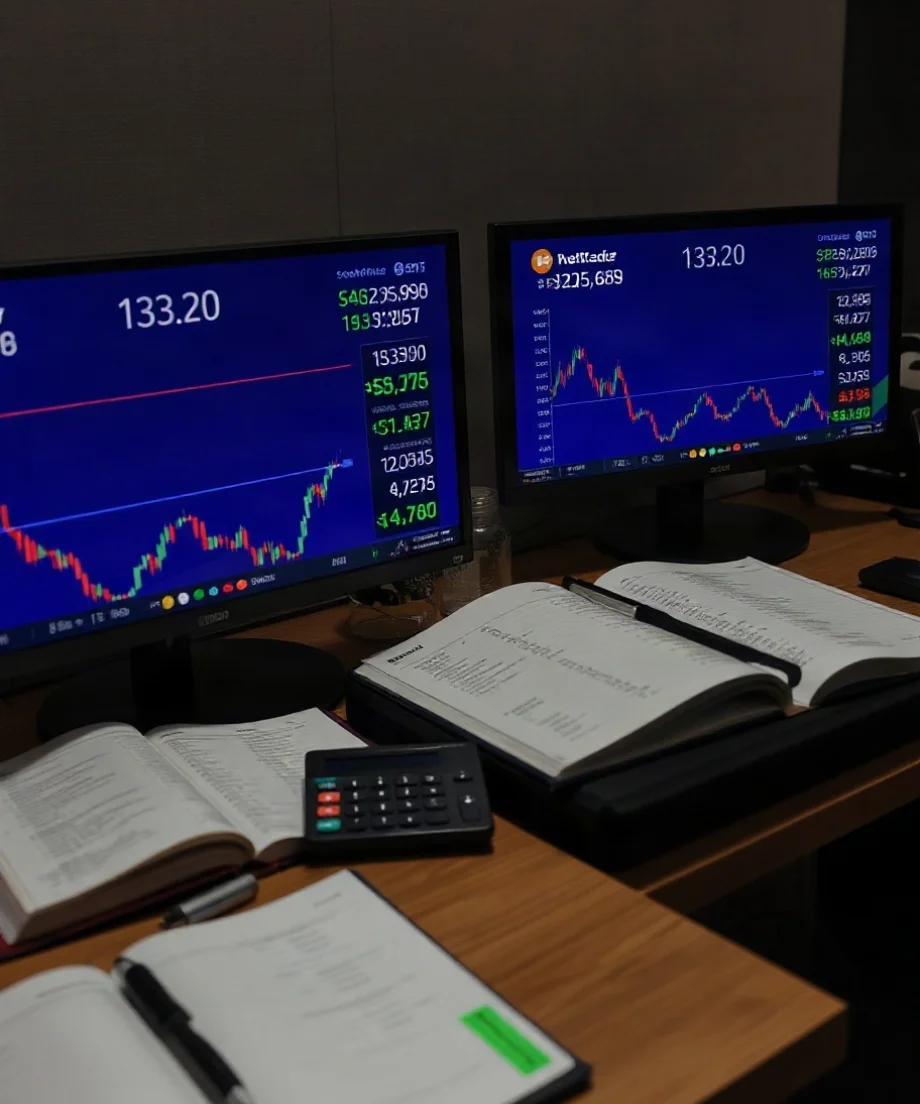
The order book is the list of open buy and sell orders for a trading pair. The highest price a buyer is currently offering is the best bid. The lowest price a seller is currently accepting is the best ask. The difference between them is the bid-ask spread.
If you want to sell immediately, you generally interact with available bids. If you want to buy immediately, you generally interact with available asks. A price chart may show a last-traded price that is between these levels, so it may not represent the exact execution price for your order.
The spread is often narrower in heavily traded markets and wider in markets with less liquidity. It can also expand quickly during sharp price movements, major announcements, technical interruptions, or periods when traders withdraw liquidity. A quote that looks attractive may become less attractive after your order reaches the market.
Why a large order can receive multiple prices
Order-book depth determines how much can be bought or sold at each price. Suppose an exchange shows a small amount available at the best ask, followed by larger amounts at progressively higher prices. A market order larger than the first level may fill across several levels. The resulting average execution price can therefore be higher than the initially displayed ask.

This effect is called slippage. It can occur when buying or selling and is more likely when the asset or trading pair has limited liquidity. Slippage is one reason that a simple price difference between two exchanges does not automatically represent an available arbitrage opportunity.
Liquidity and trading volume affect price differences
Liquidity describes how easily an asset can be traded without causing a substantial price change. Trading volume is related, but it is not the same thing. An exchange can report activity while still having limited order-book depth at the exact price levels you need.
When liquidity is thin, a single moderately sized order can move the market. The last-traded price may also become stale if trades happen infrequently. This is especially important for smaller tokens, less active trading pairs, and markets that operate during periods of reduced participation.
Liquidity can also vary by trading pair. A coin paired with a widely used stablecoin may have a different spread and depth from the same coin paired with a fiat currency or another cryptocurrency. Always compare the exact trading pair rather than assuming that every quote for the asset is interchangeable.
Exchange fees change the effective price
The displayed market price is only one part of the transaction cost. Exchanges may charge trading fees, and the applicable rate can depend on factors such as the account’s fee tier, order type, payment method, or current platform policy. These details are time-sensitive and should be verified directly in the exchange’s current fee schedule before trading.
Withdrawal fees and network fees can matter when moving assets between exchanges. A platform may also apply minimum withdrawal amounts, processing delays, or temporary restrictions. Because fees and conditions can change, do not assume that a visible price gap equals a guaranteed profit.
A basic estimate of the effective purchase cost is:
Effective cost = Asset purchase amount + trading fee + withdrawal cost + network-related cost + slippage
This is a simplified educational model. Some costs may be charged in a different asset, included in the quoted execution price, or affected by the order type and settlement process. You should use the exchange’s current documentation and account preview whenever available.
For a broader fee comparison, you can use the Crypto Fee Calculator, while remembering that calculator results depend on the inputs you provide and may not include every platform-specific charge.
Stablecoin and fiat prices are not identical
The same cryptocurrency can have different quoted values depending on what it is being traded against. A Bitcoin-to-dollar pair, a Bitcoin-to-stablecoin pair, and a Bitcoin-to-euro pair each reflect a different market. The stablecoin itself may trade slightly above or below its intended reference value, and fiat currency conversion rates can change over time.
For that reason, comparing a coin’s quoted number across exchanges requires a consistent unit of account. If one price is displayed in a stablecoin and another in U.S. dollars, first determine whether the stablecoin is currently trading at the same value as the dollar. Do not treat that relationship as permanently fixed without checking current market data.
Prices may be delayed or calculated differently
Price websites, mobile apps, and exchange interfaces may update at different speeds. One service may show a recent trade, while another displays an index, a volume-weighted average, or a composite price drawn from several venues. Data feeds can also experience delays, outages, rounding differences, or temporary errors.
When comparing prices, check the following:
- The exact exchange and trading pair
- The timestamp of the quote
- Whether the number is a last-traded price, bid, ask, index, or average
- The currency or stablecoin used for the quote
- The size of the order you want to place
- The available liquidity at the relevant price levels
For a general conversion between assets or currencies, the Crypto Converter can help organize the calculation. It should not be treated as a guarantee of the execution price on a particular exchange.
Why arbitrage does not eliminate every price gap
Arbitrage involves attempting to buy an asset at a lower price in one market and sell it at a higher price in another. In theory, this activity can push prices closer together. In practice, the opportunity may disappear after accounting for trading fees, spreads, slippage, withdrawal costs, transfer time, taxes, custody risks, and changes in the market during settlement.
Some traders also keep funds on multiple platforms so they can act without waiting for a blockchain transfer. That approach introduces separate risks, including exchange insolvency, account restrictions, cybersecurity incidents, operational mistakes, and counterparty exposure. It is not a risk-free strategy, and a price gap visible on a chart does not prove that a trade can be completed profitably.
Network congestion can make the situation more difficult. If an asset takes time to transfer, the destination-market price may change before the funds arrive. A withdrawal may also be paused or require additional confirmation. Verify the current network status, supported networks, minimums, and processing terms through the relevant exchange or wallet provider.
How to compare exchanges more accurately
1. Compare the same trading pair
Use the same asset, quote currency, and market type on both platforms. A spot market should not be compared directly with a perpetual contract or another derivative without accounting for the different product structure and risks.
2. Compare executable prices, not only chart prices
Review the current bid and ask levels and estimate the average price for your intended order size. A small displayed difference may vanish when your order moves through the order book.
3. Include every known cost
Add trading fees, spread, expected slippage, withdrawal charges, network costs, and any conversion expense. Check current primary-source information because fee schedules and platform policies can change.
4. Check timing and settlement limits
Consider how long deposits and withdrawals may take, whether the network is functioning normally, and whether the exchange imposes limits or review procedures. A theoretical opportunity is less useful if the transfer cannot be completed in time.
5. Record the assumptions
If you are calculating a potential profit, write down the price, order size, fee assumptions, expected execution levels, and timestamp. This makes it easier to distinguish a hypothetical result from an actual outcome.
A simplified profit calculation is:
Estimated profit = Sale proceeds − purchase cost − trading fees − transfer costs − slippage − other applicable costs
This formula is an estimate, not a promise of a return. It excludes factors that may be difficult to predict, such as price movement during execution, account restrictions, taxes, and unexpected network or platform events. For scenario analysis, the Crypto Profit Calculator can help you test different assumptions.
How price differences affect profit calculations
A profit calculator may produce different results depending on which price source you enter. Using a single headline price can make the result look more favorable than the amount you could actually receive. This is particularly important when the asset is volatile or the order is large compared with available liquidity.
For a basic return calculation, the formula is:
ROI percentage = (Ending value − total invested cost) ÷ total invested cost × 100
To make this estimate more realistic, total invested cost should include the purchase amount and relevant fees. Ending value should be based on a plausible execution price after considering the bid, spread, slippage, and selling costs. Past prices or a current quote do not predict future performance.
If you are comparing purchases made over time rather than trying to match exchange prices, a Crypto DCA Calculator can help illustrate how different entry prices and contribution schedules affect an average cost. The output remains an educational scenario rather than personalized investment advice.
Practical safety checks
Before transferring funds to an unfamiliar platform, verify the exchange’s official domain, supported network, deposit address, withdrawal rules, and security requirements. Send a small test transaction only if you understand the associated costs and risks. Never rely on a social media message or an unofficial account for an address or support instruction.
Keep records of transaction times, amounts, fees, and execution prices. These records can help you evaluate whether a price difference was real after costs and may also be useful for your own financial reporting. Tax treatment is jurisdiction-specific and can change, so consult current official guidance or a qualified professional for questions about your situation.
Key takeaway
Crypto prices differ between exchanges because each venue has its own supply and demand, order book, liquidity, fees, trading pair, data feed, and operating conditions. Small gaps are common; larger gaps may be temporary or difficult to trade. Compare executable bid and ask prices, include all costs, verify time-sensitive information with primary sources, and treat calculator outputs as estimates rather than guaranteed results.



Comments
0No comments yet. Be the first to share a helpful note or question.
Leave a Comment
Your email address will not be published. Comments are reviewed before appearing on the site.