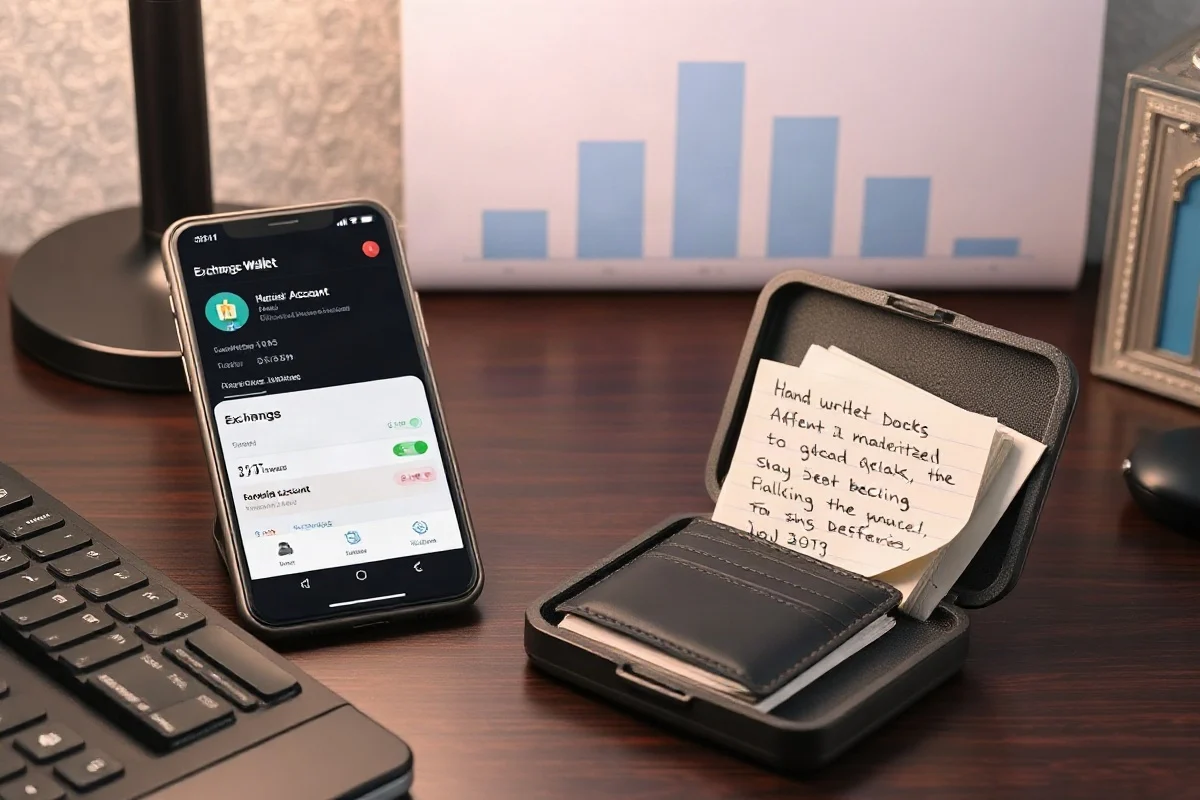
An exchange wallet is managed by a cryptocurrency platform, while a personal wallet is controlled by you through private keys or a recovery phrase. Exchange wallets are usually simpler for buying, selling, and trading, but they require you to trust the platform to safeguard access to your assets. Personal wallets provide greater control and can reduce reliance on a centralized company, but they also make you responsible for backups, transaction approvals, and security. Neither option is automatically right for everyone, so the practical choice depends on how you use crypto, how much convenience you need, and whether you can manage self-custody safely.
What is an exchange wallet?
An exchange wallet is an account-based wallet provided by a cryptocurrency exchange or trading platform. When you deposit coins or tokens, the platform generally holds the associated private keys and records your balance in its internal system. You can view the balance through an app or website, place trades, and request withdrawals to an outside address.
In this arrangement, you control access to your exchange account, but you may not directly control the blockchain keys for each asset. The platform handles many technical tasks, including custody, transaction processing, and often network fee management. The exact structure varies by provider and asset, so users should read the platform's current custody, withdrawal, and security documentation before depositing funds.
Advantages of an exchange wallet
- Convenience: Buying, selling, swapping, and transferring assets can be managed from one interface.
- Easy access: Account recovery may be available through the platform's support and identity-verification procedures, subject to its policies.
- Trading functionality: Funds can often be moved into trading products without first signing an on-chain transaction from a separate wallet.
- Lower technical burden: The exchange generally manages private-key storage and many blockchain details.
Limitations and risks
The main limitation is counterparty risk. If an exchange experiences a security incident, operational problem, insolvency event, account restriction, or service outage, access to your assets may be delayed or affected. This does not mean that every exchange will fail, but it means an exchange balance is not the same as direct self-custody.
Exchange accounts are also attractive targets for phishing, password theft, SIM-swapping, and unauthorized logins. Security features such as strong passwords, an authenticator app, withdrawal protections, and hardware security keys can reduce some risks, but no security measure eliminates every threat. Platform policies, availability, fees, and regulatory requirements can change, so verify current information directly with the exchange.
What is a personal wallet?
A personal wallet, often called a self-custody wallet, allows you to control the private keys associated with your crypto addresses. The wallet may be a mobile app, desktop program, browser extension, hardware device, or another compatible system. Your assets remain recorded on the blockchain; the wallet stores or manages the credentials needed to authorize transactions.
Personal wallets do not literally contain coins in the way a physical wallet contains cash. Instead, they help you generate addresses, view balances, and sign transactions. A recovery phrase or private key can often restore access on a compatible wallet, which makes protecting that information essential.
Advantages of a personal wallet
- Direct control: You authorize transactions without asking an exchange to release funds.
- Broader blockchain access: A compatible wallet may connect to decentralized applications, networks, and protocols that an exchange does not support.
- Reduced platform dependence: You are less reliant on one company's account system or withdrawal process.
- Transparent on-chain activity: Transactions can generally be verified using a blockchain explorer and the relevant public address.
Limitations and risks
Self-custody transfers more responsibility to you. If you lose the recovery phrase, expose a private key, approve a malicious transaction, or send assets to the wrong network or address, recovery may be impossible. Customer support usually cannot reverse a blockchain transaction or recreate credentials that were lost.
Personal wallets also require careful software and device management. Fake wallet apps, malicious browser extensions, clipboard malware, fraudulent websites, and impersonation scams can result in a permanent loss. Before using any wallet, verify its official source, supported networks, backup process, and security documentation. Do not rely on a screenshot, search advertisement, or social-media message as proof that a download link is genuine.
Custody is the central difference
The phrase “not your keys, not your coins” summarizes the custody distinction, although it does not describe every practical detail. With an exchange wallet, the exchange commonly controls the private keys while you hold a contractual or account-based claim to the displayed balance. With a personal wallet, you control the signing credentials, and the blockchain recognizes transactions authorized by those credentials.
Control does not automatically equal safety. A well-managed exchange account may be easier for a beginner to protect than a poorly backed-up personal wallet. Conversely, a properly secured hardware wallet can reduce exposure to some online threats, but it cannot protect someone who reveals a recovery phrase or signs a harmful transaction. Consider both control and your ability to manage that control responsibly.
How fees and transaction processing differ
Exchange and personal wallets can present fees in different ways. An exchange may charge trading fees, withdrawal fees, network-related charges, or other account-level costs. The amount and structure can vary by asset, network, account type, and current platform policy. A personal wallet may not charge a separate wallet fee, but an on-chain transaction generally requires a network fee determined by the applicable blockchain and current network conditions.
Do not assume that a transfer is free because the wallet application does not display a separate service charge. Before confirming a transaction, check the destination address, network, amount, and total fee. For a broader estimate of how transaction costs can affect a crypto transaction, you can use the Crypto Fee Calculator. Its result should be treated as an educational estimate rather than a guaranteed quote, because fees and network conditions can change.
Security practices for exchange wallets
If you keep assets on an exchange, treat the account like a high-value financial service account. Use a unique, long password stored in a reputable password manager. Turn on multifactor authentication, preferably with an authenticator app or hardware security key when supported. Review login alerts, active sessions, withdrawal settings, and approved addresses regularly.
Be cautious with email links and direct messages. Instead of clicking a message to sign in, open the verified exchange app or type the known website address yourself. Never provide a password, one-time code, private key, or recovery phrase to someone claiming to be support. Legitimate support processes can differ, so consult the provider's official help center rather than trusting an unsolicited request.
Keeping an exchange balance limited to the amount needed for active trading can reduce exposure to platform and account risks, but that approach is not a universal rule. Assess your own needs, the platform's current terms, and the risks of moving funds between services.
Security practices for personal wallets
Write the recovery phrase down using a durable method and store it offline in a secure location. Do not save it in cloud notes, email, screenshots, or an unencrypted document. Anyone who obtains the phrase may be able to control the associated assets. Anyone who loses it may be unable to restore access if the device is damaged or lost.
Use a hardware wallet only through authentic software and follow the manufacturer's setup instructions. Confirm transaction details on the device screen, not only on a computer or phone. Keep wallet software and operating systems updated, but obtain updates from verified sources. Separate everyday spending or experimental activity from long-term holdings when practical, and consider using different wallets for different risk levels.
Before sending funds, perform a small test transaction when the situation justifies it. Check the network carefully: an address that looks familiar may not support every blockchain, and sending an asset through an incompatible network can create recovery problems. Also remember that interacting with a decentralized application may require more than sending funds; you may be approving a contract action with its own risks.
Which wallet should you use?
An exchange wallet may be more suitable for funds you actively trade, small amounts used for learning, or users who are not yet prepared to manage a recovery phrase. A personal wallet may be more suitable for people who want direct control, plan to hold assets independently of an exchange, or need access to supported decentralized applications.
Many users choose a combination rather than an either-or approach. They may keep a limited trading balance on an exchange and store other assets in a personal wallet. This can diversify operational risks, but it also creates more addresses, backups, networks, and transaction decisions to manage. A complicated setup is not automatically safer; it should match your experience and ability to maintain accurate records.
A practical decision checklist
- Define the purpose: Are you trading, holding, making payments, using an application, or learning?
- Assess the amount and risk: Consider whether losing access would materially affect you, without assuming any wallet can eliminate market or technical risk.
- Review supported assets and networks: Confirm compatibility before depositing or transferring funds.
- Compare current costs: Check the exchange's current fee schedule and the network fee shown before signing a personal-wallet transaction.
- Test your backup: Make sure you understand how recovery works before relying on a wallet for significant funds. Never test by sharing the phrase with another person or website.
- Start small: Learn the process with an amount you can afford to lose and verify every transaction detail.
How wallet choice affects profit calculations
A wallet does not determine whether an asset will rise or fall, but custody costs and transaction fees can affect the result of a trade or transfer. For a simple educational example, estimated net proceeds can be expressed as:
Net proceeds = sale value − trading fees − withdrawal fees − network fees − other applicable costs
If you are evaluating a hypothetical purchase, a basic return estimate can be written as:
Estimated ROI = (ending value − total cost) ÷ total cost × 100
These formulas require assumptions. You would need to know the purchase amount, sale price, fee structure, transfer costs, and any other relevant expenses. Prices, fees, tax treatment, and market conditions are time-sensitive and may vary by jurisdiction or provider. An online calculator can help organize assumptions, but it cannot predict future prices or guarantee a result. You can compare hypothetical inputs with the Crypto Profit Calculator and review regular purchases with the Crypto DCA Calculator.
Final perspective
The key question is not whether exchange wallets or personal wallets are universally better. It is whether the custody arrangement fits your purpose, technical ability, security habits, and tolerance for platform dependence. Exchange wallets prioritize convenience and trading access. Personal wallets prioritize direct control but require careful backup and transaction management.
Whichever option you use, verify current provider policies, network details, fees, and security guidance through primary sources. Keep records of transfers, protect account credentials and recovery phrases, and treat every transaction as irreversible unless the relevant platform explicitly says otherwise. Crypto wallet education can reduce avoidable mistakes, but it cannot remove market volatility, technology risk, or the possibility of loss.


Comments
0No comments yet. Be the first to share a helpful note or question.
Leave a Comment
Your email address will not be published. Comments are reviewed before appearing on the site.