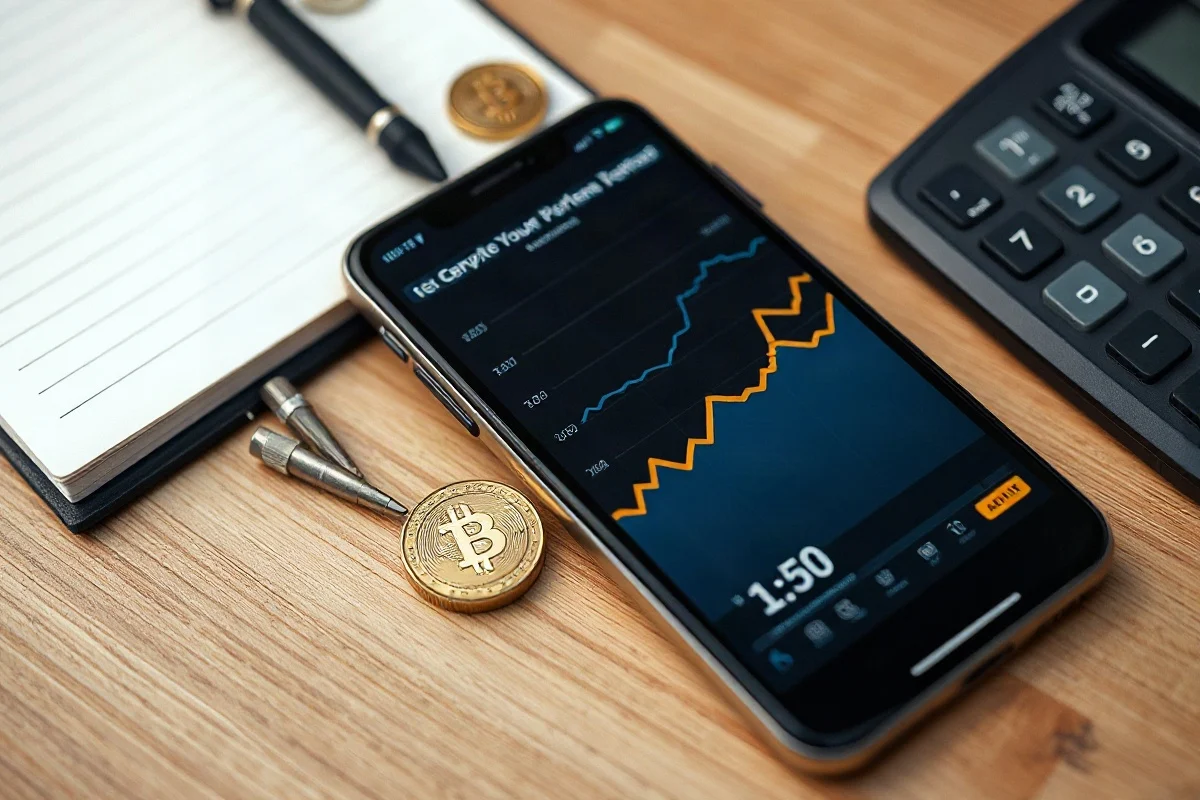
If an altcoin doubles in price, the market value of your holdings also doubles before fees, taxes, slippage, or other adjustments. For example, if you invest $500 and the coin rises 100%, your position is worth approximately $1,000 while you continue to hold the same number of coins. Your unrealized gain is about $500, not $1,000. The result changes if you buy or sell at different prices, add more funds, receive staking rewards, or incur transaction costs.
This simple outcome is easy to misunderstand because a price chart does not show your personal entry price, portfolio size, fees, or taxes. Understanding the difference between price growth, portfolio value, and realized profit can help you evaluate an altcoin move more accurately.
The basic calculation when an altcoin doubles
A doubling means the price increases by 100%. The core formulas are:
New price = Original price × 2
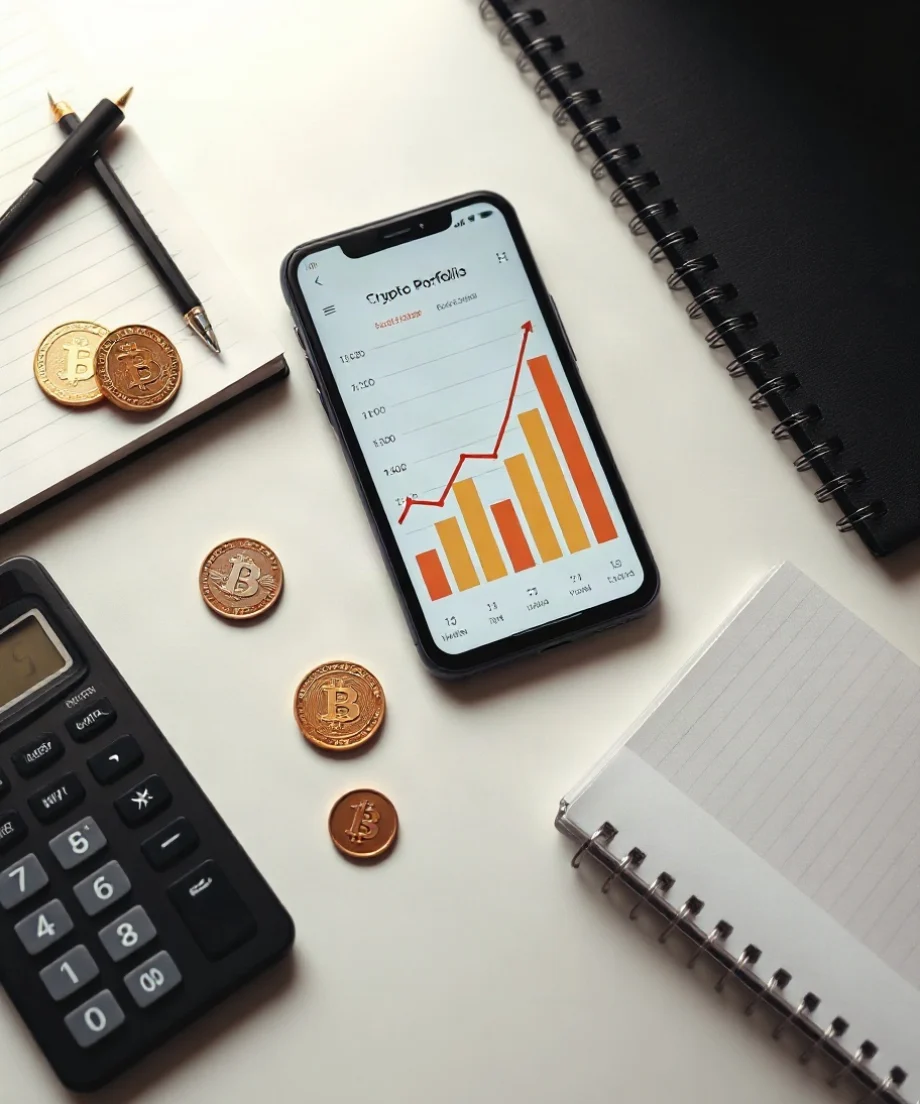
New position value = Number of coins × New price
Unrealized profit = New position value − Original investment
ROI = (Unrealized profit ÷ Original investment) × 100
Suppose you buy 1,000 coins at $0.50 per coin. Your initial investment is:
1,000 × $0.50 = $500
If the price doubles to $1.00, your position is worth:
1,000 × $1.00 = $1,000
Your unrealized profit is $500, and your simple ROI is:
($500 ÷ $500) × 100 = 100%
This example assumes no trading fees, network fees, spread, slippage, taxes, staking rewards, additional purchases, or token sales. It is an educational illustration rather than a prediction or personalized investment result.
Doubling the price is not the same as doubling your cash
Your investment only becomes cash after you sell, and the amount you receive depends on the execution price and costs. Until then, the gain is generally described as unrealized because the position remains exposed to market movements.
If the altcoin reaches twice your purchase price and then falls before you sell, the value of your holdings can decline. A quoted profit on a portfolio tracker may therefore change from minute to minute. Market data, liquidity, spreads, and exchange execution conditions are time-sensitive and can vary across platforms.
To estimate a sale result, use:
Net proceeds = Gross sale value − trading fees − network or withdrawal costs − other applicable costs
The exact treatment of a fee depends on how the exchange or wallet applies it. Some costs may be deducted from the asset amount, while others may be charged separately. Check the current fee schedule and transaction details for the platform you use. You can also compare assumptions with a calculator ng kita sa crypto and review trading costs with a calculator ng bayarin sa crypto.
How your number of coins affects the outcome
The percentage gain is the same for every holder who buys at the same price, but the dollar gain depends on the size of the position. A 100% increase on a $50 position produces a different dollar result from a 100% increase on a $5,000 position.
For instance, consider three hypothetical investors who each purchase the same altcoin at the same entry price:
- An investor with $100 would have approximately $200 before costs after a doubling.
- An investor with $1,000 would have approximately $2,000 before costs after a doubling.
- An investor with $10,000 would have approximately $20,000 before costs after a doubling.
Each investor has a 100% price-based ROI under the same assumptions, but their dollar exposure and potential loss after a reversal are very different. A percentage return should therefore be considered together with position size, portfolio concentration, and the amount of capital that could be lost.
What happens if you sell part of the position?
You do not have to sell the entire position when an altcoin doubles. Selling part of the holdings realizes only the portion associated with the sale, while the remaining coins continue to change in value.
Assume the same 1,000 coins bought at $0.50 and now priced at $1.00. If you sell 400 coins, the gross sale value is:
400 × $1.00 = $400
The remaining 600 coins have a market value of:
600 × $1.00 = $600
Before costs, the combined value of the cash received and remaining holdings is $1,000. Your realized gain on the 400 coins is based on their cost basis, while the gain on the remaining coins remains unrealized. The method used to identify which units were sold can matter for recordkeeping and tax reporting, so maintain accurate transaction records and consult a qualified tax professional about your circumstances.
Why fees, spread, and slippage matter
A chart may show that a coin rose from $0.50 to $1.00, but your actual result can be lower. Trading fees reduce proceeds, while the bid-ask spread means the price available to sell may differ from the most recently displayed price. Slippage can also occur when an order executes at several prices, especially in a market with limited liquidity or during rapid price movements.
Network fees may apply when moving tokens between wallets or platforms. These costs are separate from exchange trading fees and can vary by network conditions and transaction type. Do not assume that a fee shown on one platform applies to another. Verify current costs directly with the relevant exchange, wallet, or network documentation before transacting.
A useful calculation should therefore include:
- Purchase price and the amount invested
- Number of tokens received
- Purchase fees
- Sale price and number of tokens sold
- Sale fees, spread, and possible slippage
- Network or withdrawal costs
- Any relevant tax or reporting considerations
Market capitalization can change dramatically
When an altcoin price doubles, its market capitalization may also rise substantially, but the exact change depends on the circulating token supply. The basic formula is:
Market capitalization = Presyo ng token × Umiikot na supply
If the circulating supply stays constant, a price doubling would generally imply a market capitalization that is twice as large. However, token supply can change through emissions, unlocks, burns, staking distributions, or other mechanisms. New supply can increase the market capitalization required to sustain a particular price, while a changing supply can make simple comparisons less reliable.
Market capitalization is not the same as the amount of money invested in a token. It is a calculated value based on price and a supply measure. For supply assumptions, consult current project documentation and independent market data, and consider using a market cap calculator to test different scenarios.
Why an altcoin may double—and why that does not prove strength
Altcoins can experience large price changes because of changing demand, market sentiment, exchange listings, product announcements, broader market movements, speculation, liquidity conditions, or other factors. The specific reason for a move should not be assumed from price action alone. Verify material claims through primary project sources and reliable market information.
A doubling also does not establish that the asset will continue rising. High volatility can produce sharp advances and declines. Smaller or less liquid tokens may be especially sensitive to large orders, limited trading activity, concentrated ownership, or changes in market access. Past performance cannot guarantee future results, and a previous doubling is not a reliable forecast.
What if you bought at several different prices?
Many investors accumulate an altcoin over time rather than making one purchase. In that situation, the relevant comparison is often the weighted average cost, not the first purchase price.
Ang pinasimpleng pormula ng weighted average ay:
Average cost per coin = Total purchase cost ÷ Total coins acquired
For example, suppose you spend $200 to buy 400 coins and later spend $300 to buy 300 more. Your total cost is $500 and your total holdings are 700 coins:
$500 ÷ 700 = approximately $0.714 per coin
If the price later reaches $1.428, the position is approximately twice the average purchase price before costs. The exact accounting result may differ if you include purchase fees, transfers, rewards, or a tax-lot method. For recurring purchases, a calculator ng DCA sa crypto can help illustrate how different purchase schedules affect average cost and portfolio value.
Staking rewards and other distributions
If you earn staking rewards while holding an altcoin, your total return may include both price movement and additional tokens. That can make the calculation more complex. You may hold more coins than you originally purchased, and the rewards may have their own value, fees, lockup conditions, or recordkeeping requirements.
Reward rates, eligibility rules, lockup periods, and protocol parameters can change. Do not treat a displayed staking rate as a guaranteed return. Verify current terms with the relevant protocol or service provider, understand smart-contract and counterparty risks, and model rewards separately from price appreciation. A kalkulador ng staking can help compare assumptions, but it cannot predict future token prices or eliminate risk.
Mga buwis at pag-iingat ng rekord
A price increase by itself may not create the same tax event as a sale, exchange, or other disposal, but tax treatment depends on the transaction, jurisdiction, applicable rules, and individual circumstances. Rules can change, and digital-asset reporting requirements may involve more than one type of transaction. Do not rely on a generic example as tax advice.
Keep records of dates, quantities, prices, fees, wallet transfers, rewards, and transaction identifiers. Before filing or making decisions based on tax consequences, verify current information with the appropriate government source and consider speaking with a qualified tax professional familiar with digital assets.
A practical checklist after an altcoin doubles
- Confirm the current price using a reliable source rather than relying on an old screenshot or social media post.
- Calculate your actual cost basis and the number of coins currently held.
- Estimate gross value and subtract realistic trading, network, spread, and slippage costs.
- Separate unrealized gains from amounts you have actually sold.
- Review how much of your overall portfolio is concentrated in the altcoin.
- Check token supply, unlocks, liquidity, and project-specific risks using current primary information.
- Record every transaction and verify any tax or reporting implications.
- Protect your account and wallet credentials, and avoid making rushed decisions based solely on a rapid price move.
The key takeaway
When an altcoin doubles, a buy-and-hold position is worth roughly twice its original value before costs, provided the number of coins and relevant assumptions remain unchanged. That represents a 100% price-based gain, but only a sale converts an unrealized gain into proceeds. Fees, slippage, supply changes, staking rewards, portfolio contributions, and tax considerations can all affect the final result.
Use formulas and calculators to understand the arithmetic, but treat every market scenario as an estimate rather than a promise. Crypto assets are volatile, and a large gain can reverse quickly. Educational calculations can clarify the numbers; they cannot determine whether a particular altcoin or strategy is appropriate for you.

Comments
0No comments yet. Be the first to share a helpful note or question.
Leave a Comment
Your email address will not be published. Comments are reviewed before appearing on the site.