
To find the break-even price for any altcoin, divide your total cost by the number of coins you own, then account for fees you would pay when selling. In its simplest form: Break-even price = total amount invested ÷ total coins held. If you want to break even after a future selling fee, use: Break-even sale price = total cost ÷ [coin quantity × (1 − selling-fee rate)]. This calculation shows the price at which your sale proceeds would cover your recorded costs; it does not predict whether the altcoin will reach that price.
What the break-even price means
Your break-even price is the approximate market price at which selling your position would recover the money you put into it. A price above break-even may produce a gain before taxes and other costs, while a price below break-even generally represents a loss. The result is only as accurate as the information you enter.
For a basic purchase, the calculation is straightforward. Suppose an educational example uses a total purchase cost of $1,000 and a holding of 500 tokens:
Break-even price = $1,000 ÷ 500 tokens = $2 per token

This example excludes trading fees, network costs, spreads, taxes, staking effects, and any later purchases. Those items can materially change the price you need to recover your original outlay.
Rumus dasar harga impas
Start by identifying two values:
- Total cost: The money spent acquiring the coins, including purchase fees if you want an all-in result.
- Total quantity: The number of coins currently held from those purchases.
Then apply this formula:
Average cost per coin = total cost ÷ total quantity
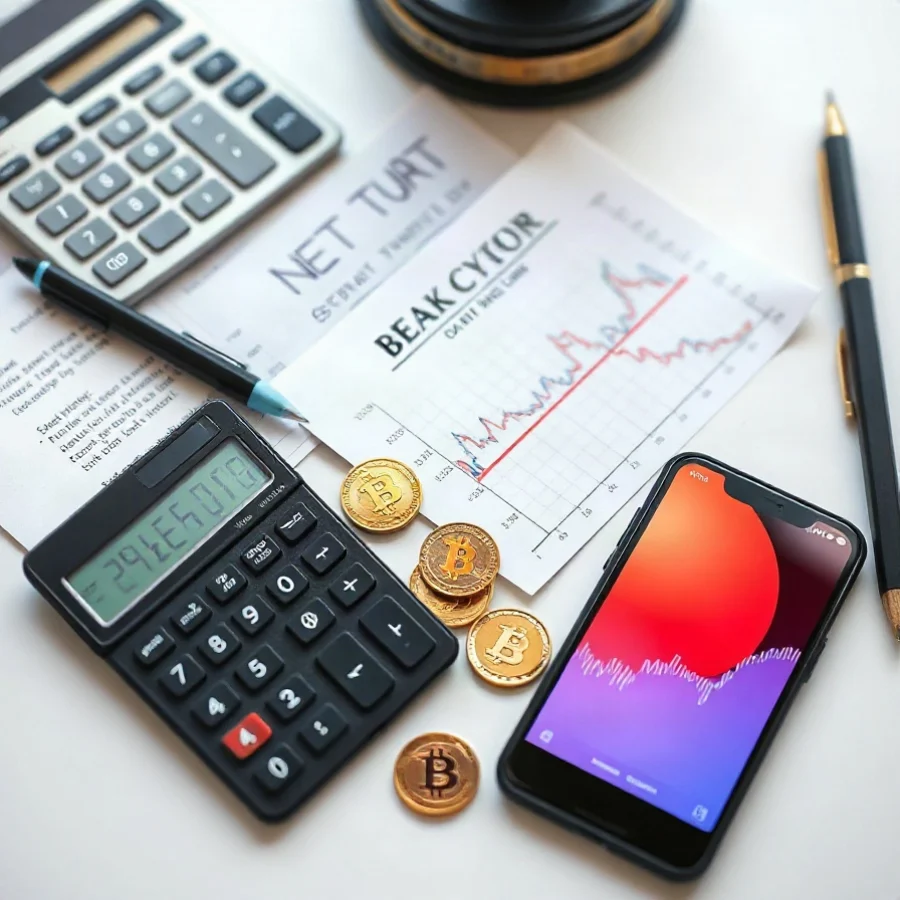
For example, if you make one purchase for $750 and receive 300 tokens after the transaction is completed, your average cost is $2.50 per token. If the token’s market price rises to $2.50, the position is approximately at break-even before a future selling fee. If the market price falls to $2, the position is below its average cost.
Use the quantity actually credited to your wallet or exchange account rather than the quantity you intended to purchase. A fee charged in the asset itself can reduce the coins received and raise your effective cost per coin.
How to include trading and network fees
Fees can enter the calculation in several ways. An exchange may charge a percentage trading fee, a fixed fee, or a spread between the quoted buy and sell prices. A blockchain transaction may also require a network fee. The exact structure varies by platform, asset, payment method, and network conditions, so verify current details with the exchange or wallet provider before calculating.
Including fees in your total cost
If you know the purchase fee in dollars, add it to the amount paid:
All-in cost = purchase amount + purchase fee + other acquisition costs
For instance, an educational example could involve $980 used to buy an altcoin and a $20 purchase fee. The all-in cost is $1,000. If the account receives 400 coins, the average cost is $2.50 per coin.
If the purchase fee is expressed as a percentage, a simplified estimate is:
Purchase cost including fee = purchase amount × (1 + fee rate)
A 1% fee rate would be entered as 0.01. However, this estimate may not reflect minimum fees, spread, or a fee deducted from the asset rather than cash.
Including the cost of selling
Even if the market price reaches your average cost, a selling fee can leave you below break-even. If the selling fee is a percentage of the sale value, use:
Break-even sale price = total cost ÷ [total quantity × (1 − selling-fee rate)]
Assume total cost is $1,000, holdings are 400 coins, and the selling fee is 1%. The calculation is:
$1,000 ÷ [400 × (1 − 0.01)] = approximately $2.53 per coin
This is an educational illustration, not a quote for any specific platform. It does not include slippage, taxes, withdrawal charges, or changing network costs.
Calculating break-even after multiple purchases
Many altcoin holders buy at different prices. In that situation, do not average the purchase prices unless each purchase represents the same number of coins. Instead, add the dollar costs and divide by the total quantity.
Weighted average cost = (cost of purchase 1 + cost of purchase 2 + …) ÷ (quantity from purchase 1 + quantity from purchase 2 + …)
Consider this example:
- Purchase 1: $600 for 300 tokens
- Purchase 2: $400 for 100 tokens
- Total cost: $1,000
- Total quantity: 400 tokens
Weighted average cost = $1,000 ÷ 400 = $2.50 per token
The simple average of the two purchase prices could produce a different and inaccurate result if the quantities differed. A spreadsheet can help you record the date, quantity, execution price, fees, and total cost for each transaction.
If you continue adding to the position, the break-even price changes. A lower-priced purchase can reduce the average cost, while a higher-priced purchase can increase it. This is one reason to update the calculation after every completed transaction instead of relying on an old estimate.
What happens when you sell part of the position?
A partial sale complicates the calculation because the remaining coins and their associated cost basis depend on the accounting method used for your records. For general portfolio tracking, you can estimate the remaining average cost by subtracting the cost assigned to the coins sold from the original total cost. The exact treatment may depend on your jurisdiction and recordkeeping method.
Do not treat a partial sale as automatically removing the same dollar amount from your original investment. Selling 25% of your coins does not necessarily remove 25% of the cost basis under every accounting approach. Keep transaction records and consult a qualified tax professional for tax reporting questions. Tax rules are time-sensitive and jurisdiction-specific, so verify current requirements with an appropriate primary government source or professional adviser.
Break-even price versus profit target
Break-even is not the same as a desired return. If you want to estimate a price for a target return, first calculate the target proceeds:
Required proceeds = total cost × (1 + target return rate)
Then account for the selling fee:
Target sale price = required proceeds ÷ [total quantity × (1 − selling-fee rate)]
For example, a 10% target return would use 0.10 in the formula. This is a mathematical scenario, not a forecast or recommendation. A target price may be unrealistic if market liquidity, volatility, project conditions, or broader market demand changes.
Important factors the simple formula may miss
Spread dan slippage
The displayed price is not always the price at which your entire order can execute. The spread is the difference between available buy and sell prices. Slippage occurs when the final execution price differs from the price you expected, often because of limited liquidity or a large order. Thinly traded altcoins can be especially sensitive to these conditions.
Staking, rewards, and token transfers
Staking rewards or other token distributions increase the number of assets you hold, but they may also create recordkeeping and tax questions. A larger token balance can reduce the average cost shown by a simple calculation, yet that does not mean the position has become less risky. Confirm how rewards are credited and recorded before including them in your quantity.
Conversions and on-chain transactions
If you exchanged one cryptocurrency for another, your effective cost may depend on the value of the asset you gave up, along with trading and network fees. Moving tokens between wallets can also create network costs without changing the number of coins you own. Keep transaction hashes, statements, and timestamps where available.
Market price sources
Altcoin prices can differ among exchanges and data providers. Check the market, trading pair, currency, and timestamp when comparing a quoted price with your break-even number. Current prices and fee schedules change, so verify them directly through the relevant exchange, market data provider, or protocol documentation.
A practical break-even workflow
- List every completed purchase and conversion.
- Record the amount paid, quantity received, and acquisition fee for each transaction.
- Add the applicable costs to calculate total cost.
- Add the coins currently included in the position to calculate total quantity.
- Divide total cost by total quantity to find the average cost per coin.
- Estimate the selling fee and adjust the result if you need an all-in break-even price.
- Compare the result with a current, verified market quote—not an outdated screenshot or social media post.
Anda dapat menggunakan Kalkulator Profit Kripto to explore cost, sale price, fees, and potential profit or loss scenarios. For several purchases made over time, the Crypto DCA Calculator can help illustrate how recurring buys affect an average entry price. If you need to examine fee assumptions separately, review the Crypto Fee Calculator.
Use the result carefully
A break-even calculation is a tracking tool, not a valuation model. It tells you what price may cover a defined set of costs under stated assumptions. It does not determine whether an altcoin is useful, solvent, liquid, secure, fairly valued, or suitable for your circumstances. Project failures, smart contract vulnerabilities, exchange disruptions, market manipulation, and sudden liquidity changes can affect whether a sale is possible at the quoted price.
For education, write down your assumptions beside the result: purchase costs, quantity, fee rates, spread estimate, rewards, and whether taxes are excluded. Recalculate when the position changes. Most importantly, avoid using a break-even number as a guarantee that the market will return to your entry price. Cryptocurrency markets are volatile, and any decision involving money should reflect your own research, risk tolerance, and financial situation.

Comments
0No comments yet. Be the first to share a helpful note or question.
Leave a Comment
Your email address will not be published. Comments are reviewed before appearing on the site.