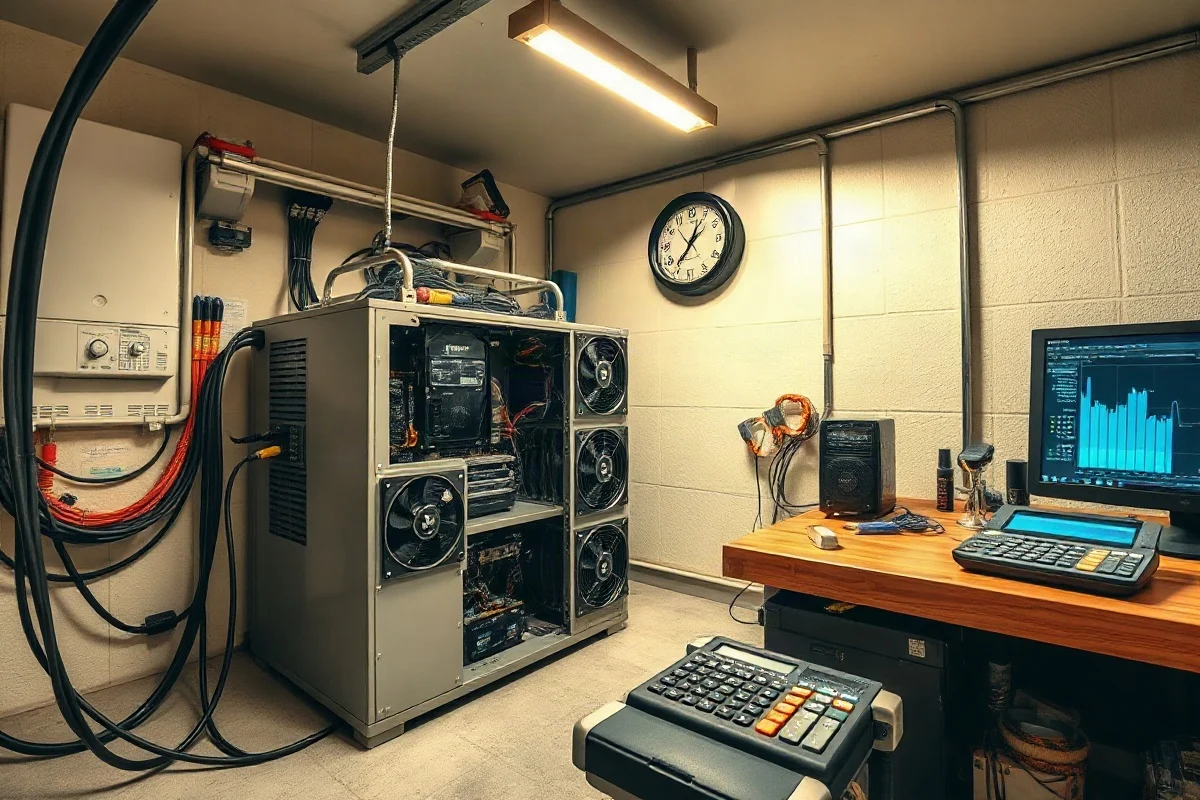
An ASIC miner may be worth the cost only when its expected mining revenue remains higher than electricity, operating, and ownership costs for long enough to recover the initial investment. Because coin prices, network difficulty, block rewards, pool fees, hardware availability, and electricity rates can change, payback is an estimate—not a promise. A useful analysis compares several scenarios instead of relying on a single optimistic number.
What ASIC payback means
ASIC stands for application-specific integrated circuit. Unlike general-purpose computers or many graphics cards, an ASIC is designed to perform a narrow mining algorithm. This specialization can improve performance and energy efficiency for a compatible proof-of-work network, but it also creates concentration risk: the machine may have limited use outside that algorithm.
Payback is the period required for cumulative mining cash flow to equal the miner’s initial cost. A simple calculation is:
Payback period = Total upfront cost ÷ Expected net monthly cash flow
The formula is useful as a first screen, but it is incomplete if revenue and expenses are likely to change. A more realistic approach calculates expected daily or monthly cash flow repeatedly under different assumptions.
Build the full cost estimate
The purchase price is only one part of an ASIC mining project. Before comparing machines, list every cost that could affect the result.
Hardware and delivery
Include the ASIC, power supply if it is not included, shipping, insurance, import charges where applicable, and any sales-related taxes or fees that apply to your situation. Prices for new and used machines are time-sensitive and can vary by seller, market conditions, delivery location, and hardware availability. Verify seller terms, warranty coverage, refund rules, and the machine’s actual condition before treating a quoted price as final.
Electrical infrastructure
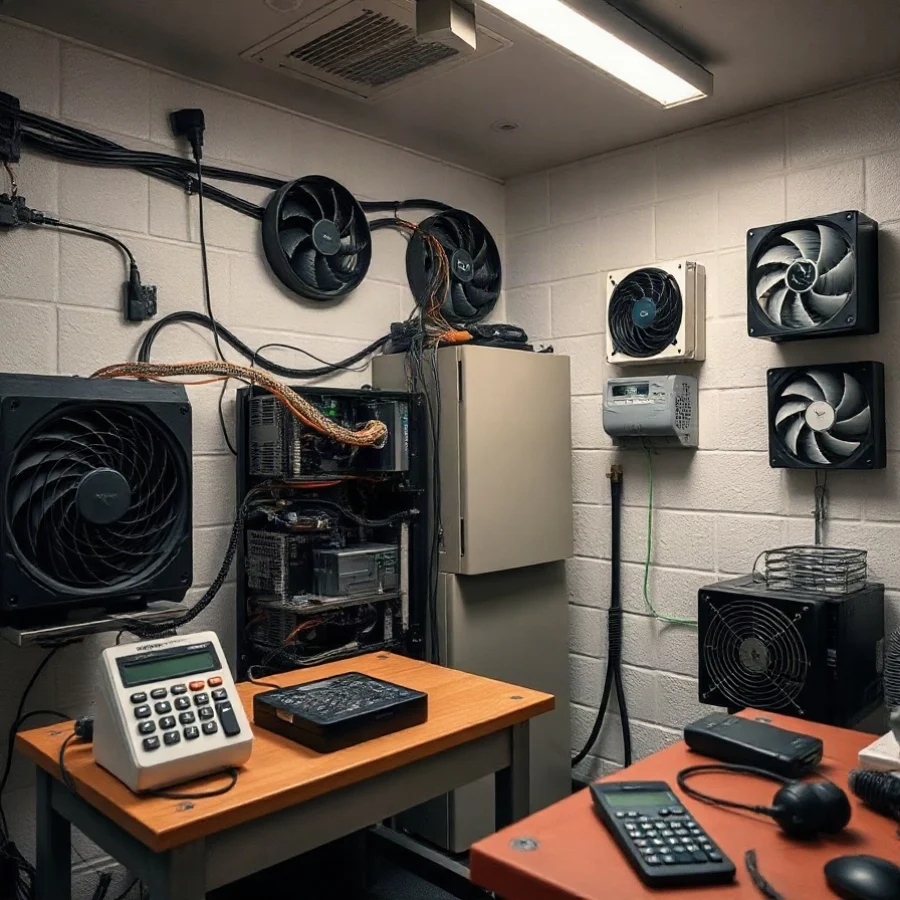
Some mining setups require upgraded circuits, wiring, ventilation, breakers, racks, noise control, or professional installation. These expenses can materially increase the break-even point. A machine that appears inexpensive may be unsuitable for a home or facility that cannot safely provide the required electrical capacity.
Operating and maintenance costs
Electricity is usually the largest recurring expense, but it is not the only one. Consider pool fees, internet service, replacement fans, filters, repairs, monitoring equipment, cooling, facility rent, and downtime. If you hire someone to manage the equipment, include that labor cost. Also account for the value of your own time if setup and troubleshooting require regular attention.
For tax treatment, depreciation, deductible expenses, and reporting obligations, consult a qualified professional familiar with your jurisdiction. Tax rules are time-sensitive and depend on facts such as location, business structure, and how the activity is classified.
The core ASIC mining profitability formula
Start with the miner’s power draw and your electricity rate:
Daily electricity cost = Power draw in kilowatts × 24 hours × Electricity rate per kilowatt-hour
For example, if a hypothetical machine uses 3.2 kilowatts and operates continuously, its estimated daily consumption is:
3.2 kW × 24 hours = 76.8 kWh per day
If the applicable electricity rate were $0.10 per kilowatt-hour, the educational example would produce a daily electricity cost of:
76.8 kWh × $0.10 = $7.68 per day
This is only an illustration, not a current cost assumption. Use the rate on your actual bill or a verified commercial quote, and check whether demand charges, time-of-use pricing, taxes, or other adjustments apply.
Next, estimate gross mining revenue using a current mining calculator or reliable data source for the selected algorithm. In simplified form:
Net daily cash flow = Gross daily mining revenue − Electricity cost − Pool fees − Other daily costs
Gross revenue depends on variables that can change frequently, including the coin’s market price, network hashrate, mining difficulty, block reward, transaction-fee conditions, and your miner’s effective hashrate. Confirm protocol parameters and current network data through appropriate primary or widely trusted sources before making a purchase decision.
For a broader comparison of revenue and expenses, you can use the Kalkulator Profit Kripto. Enter your own hardware, energy, and fee assumptions rather than treating any default value as a forecast.
Why a simple payback estimate can be misleading
A static calculation assumes that revenue and costs remain constant. Mining rarely behaves that way. If more machines join the network, competition can increase and each unit of hashrate may earn less cryptocurrency. If the mined coin’s price falls, revenue measured in dollars can decline even when the machine performs normally. Conversely, a price increase may improve the result, but it should not be treated as a dependable forecast.
Scheduled protocol changes may also affect block rewards or mining economics. The relevant changes depend on the network and can be subject to governance, technical updates, or other developments. Verify current information from the network’s official documentation and reputable data sources.
Downtime is another commonly overlooked variable. If a machine runs at an effective uptime of 95%, it does not produce the same expected output as one running 100% of the time. A basic adjustment is:
Adjusted revenue = Estimated revenue at full uptime × Expected uptime percentage
Uptime is not guaranteed. Heat, dust, unstable power, internet interruptions, firmware problems, repairs, and pool connectivity can all reduce production.
Use scenario analysis instead of one forecast
Model praktis setidaknya harus mencakup tiga kasus:
- Conservative: Lower coin price, higher network difficulty, a higher electricity rate, realistic downtime, and repair costs.
- الحالة الأساسية: Your best-supported assumptions based on current machine performance and a verified power rate.
- Upside case: More favorable conditions, clearly labeled as uncertain rather than expected.
Do not use the upside case to justify a purchase while ignoring the conservative case. Instead, ask whether the project remains financially tolerable if conditions deteriorate. A useful model can also show how many days of negative cash flow you could withstand and whether you have funds for replacement parts or a longer-than-expected payback period.
Example payback structure
Assume, purely for education, that total upfront costs are $4,000 and expected net cash flow is $8 per day. The simple payback estimate is:
$4,000 ÷ ($8 × 30 days) = approximately 16.7 months
This result is not a prediction. It assumes the $8 daily figure remains unchanged, which is unlikely in a volatile mining market. A better model would recalculate net cash flow for changing revenue, electricity rates, uptime, pool fees, maintenance, and possible resale value.
Important risks beyond operating profit
Hardware obsolescence
Newer machines may deliver more hashrate per unit of electricity, making older hardware less competitive. Even if an ASIC remains functional, its economics can deteriorate when more efficient equipment enters the network.
Resale value
Resale value may reduce your economic loss if you exit, but it is uncertain. Used hardware prices can fall quickly, buyers may discount machines with limited warranty coverage, and shipping heavy equipment can be expensive. Treat resale proceeds as a possible recovery value, not guaranteed income.
Noise, heat, and location
ASIC miners can produce substantial noise and heat. Residential operation may create practical problems, including ventilation, neighbor complaints, equipment wear, or higher cooling expenses. Confirm that your location, lease, electrical system, and insurance arrangements permit the activity. Local requirements can change, so verify them with the relevant authorities or professionals.
Coin and pool exposure
Mining revenue may be paid in a specific coin or converted through a pool or service. Pool terms, payout thresholds, fees, custodial practices, and availability can change. Review the current documentation before connecting hardware, and avoid leaving significant balances on platforms without understanding the associated wallet and counterparty risks. The site’s Dompet & Keamanan resources can help with general custody and security education.
How to improve your estimate
- Record the machine’s verified power draw at the wall, not only the manufacturer’s laboratory specification.
- Use your actual electricity rate, including applicable adjustments and fixed charges where relevant.
- Check current network hashrate, difficulty, block-reward information, and pool terms.
- Subtract fees, expected downtime, maintenance, cooling, and facility expenses.
- Model multiple coin-price and difficulty scenarios without assuming a guaranteed market direction.
- Review the result weekly or monthly because mining conditions are dynamic.
You can also compare mining with other approaches, but comparisons should use consistent assumptions and risk definitions. For example, a mining model includes hardware depreciation and operational work, while a direct purchase model includes market exposure and custody considerations. Tools such as the Crypto Fee Calculator can help you account for transaction costs when comparing alternatives.
When an ASIC may not be a good fit
An ASIC may be unsuitable if your electricity rate is high, your power infrastructure requires a large investment, you cannot manage heat and noise, or the purchase would use money needed for essential expenses. It may also be a poor fit if your expected payback depends on a particular coin price, a perfect uptime record, or permanently favorable network conditions.
Mining is an equipment-intensive activity with uncertain revenue. A calculator can make assumptions visible, but it cannot eliminate market, technical, counterparty, regulatory, or tax uncertainty. Use verified current data, keep a margin for adverse conditions, and treat every result as educational analysis rather than personalized financial advice.
Comments
0No comments yet. Be the first to share a helpful note or question.
Leave a Comment
Your email address will not be published. Comments are reviewed before appearing on the site.