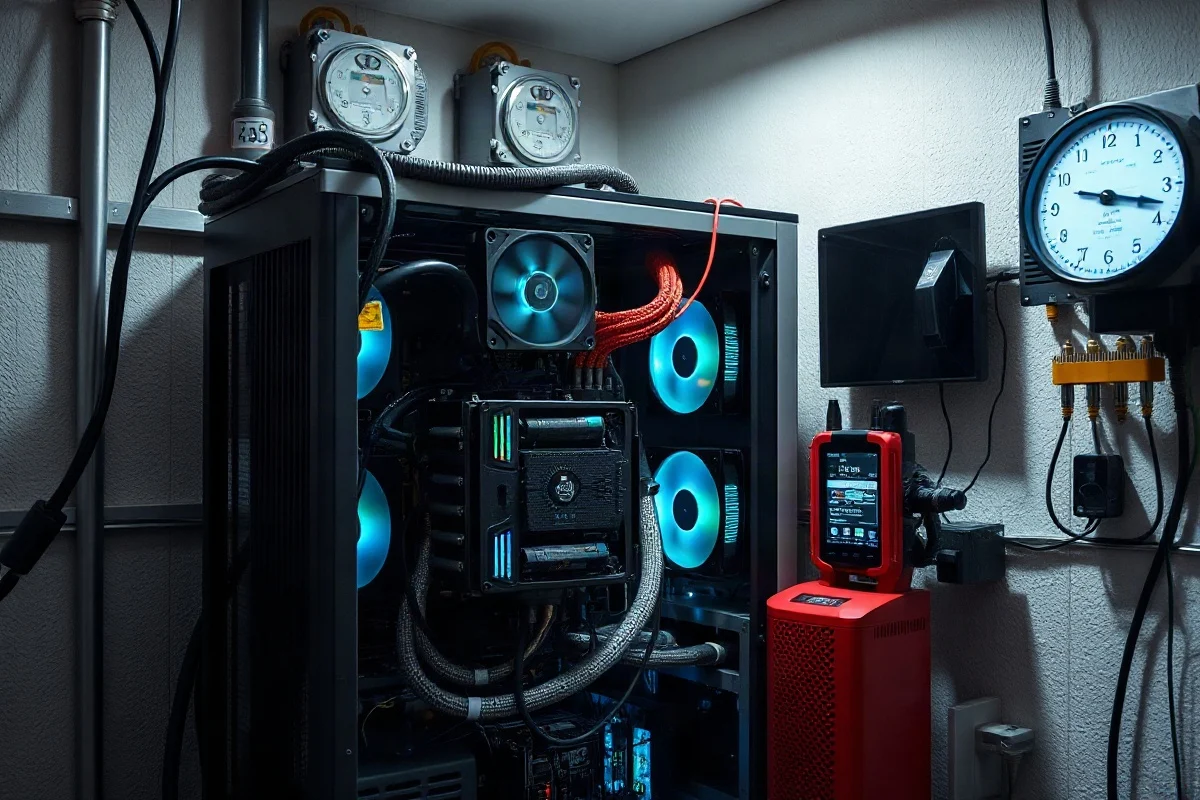
A crypto miner can earn anywhere from a small amount to a substantial gross revenue per day, but there is no universal daily figure. The result depends on the cryptocurrency, mining hardware, network difficulty, block reward, current coin price, electricity rate, pool fees, uptime, and operating costs. In many cases, gross mining revenue is not the same as profit: electricity, equipment, maintenance, hosting, and taxes can reduce or eliminate the amount left over.
The most reliable way to estimate daily earnings is to combine current data from the mining pool or network with your machine's measured performance. Treat the result as an estimate, not a guaranteed return. Cryptocurrency prices, mining difficulty, block rewards, network fees, and local energy costs can change over time.
What Determines a Miner’s Daily Earnings?
Mining income is created by contributing computing power to a proof-of-work network. Depending on the network, miners compete to add blocks, receive block rewards, and collect eligible transaction fees. Mining pools combine the computing power of many participants and distribute rewards according to each miner’s contributed work, usually after deducting a pool fee.
The main factors are:
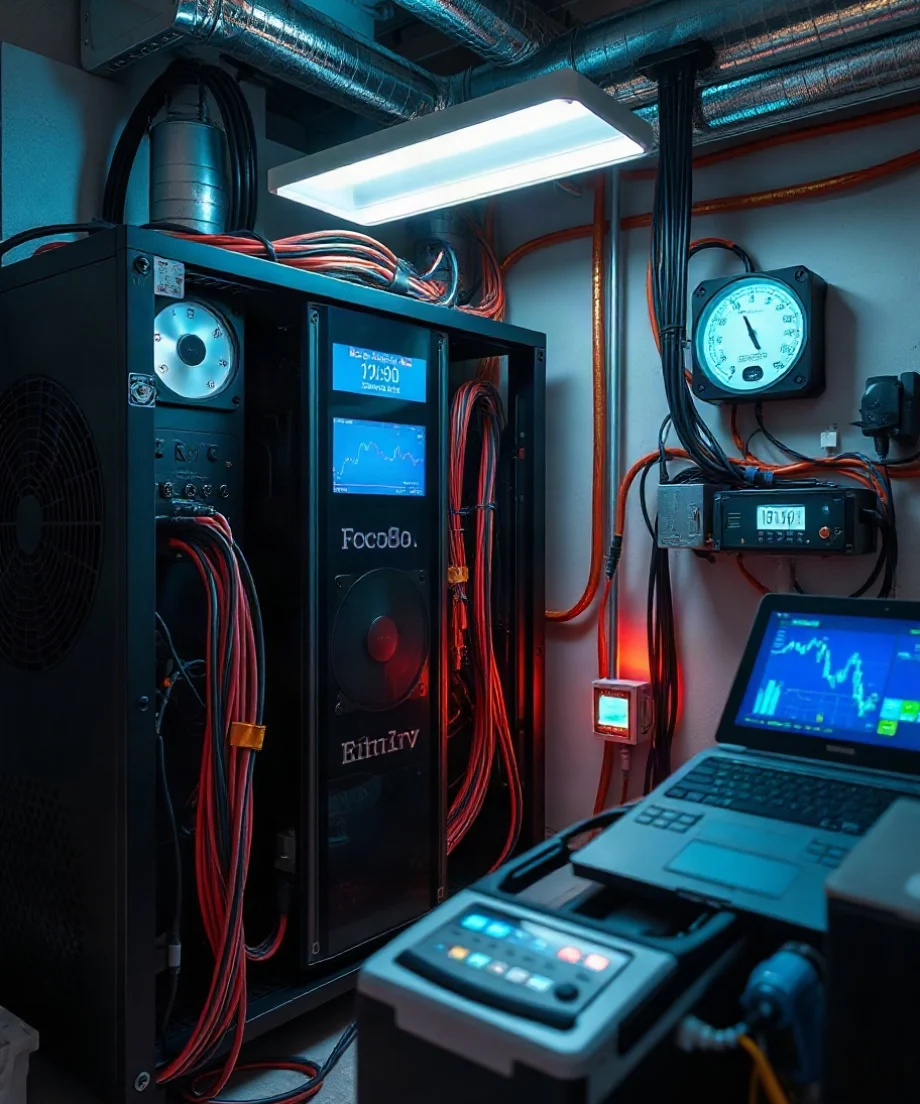
- Hash rate: The amount of computing power your hardware contributes, commonly measured in hashes per second.
- Network difficulty: A measure of how competitive mining is. Higher difficulty generally means a smaller share of rewards for the same hardware, all else being equal.
- Block reward: The amount paid to the miner or pool for successfully adding a block. Some networks change their rewards according to scheduled or governance-related rules.
- Coin price: The market value used to convert mined coins into dollars. This figure changes continuously and should be checked using a current market data source.
- Electricity cost: The largest operating expense for many miners. The relevant rate is the price per kilowatt-hour, including applicable demand charges or other billing components when relevant.
- Pool fee: A percentage or fixed charge deducted by a mining pool.
- Uptime and reliability: A machine that is offline, overheated, throttled, or under maintenance earns less than its theoretical maximum.
The Basic Daily Mining Revenue Formula
A simplified estimate for gross daily revenue is:
Gross daily revenue = estimated coins mined per day × current coin price
To estimate net daily profit, subtract operating expenses:
Net daily profit = gross daily revenue − electricity cost − pool fees − other daily expenses
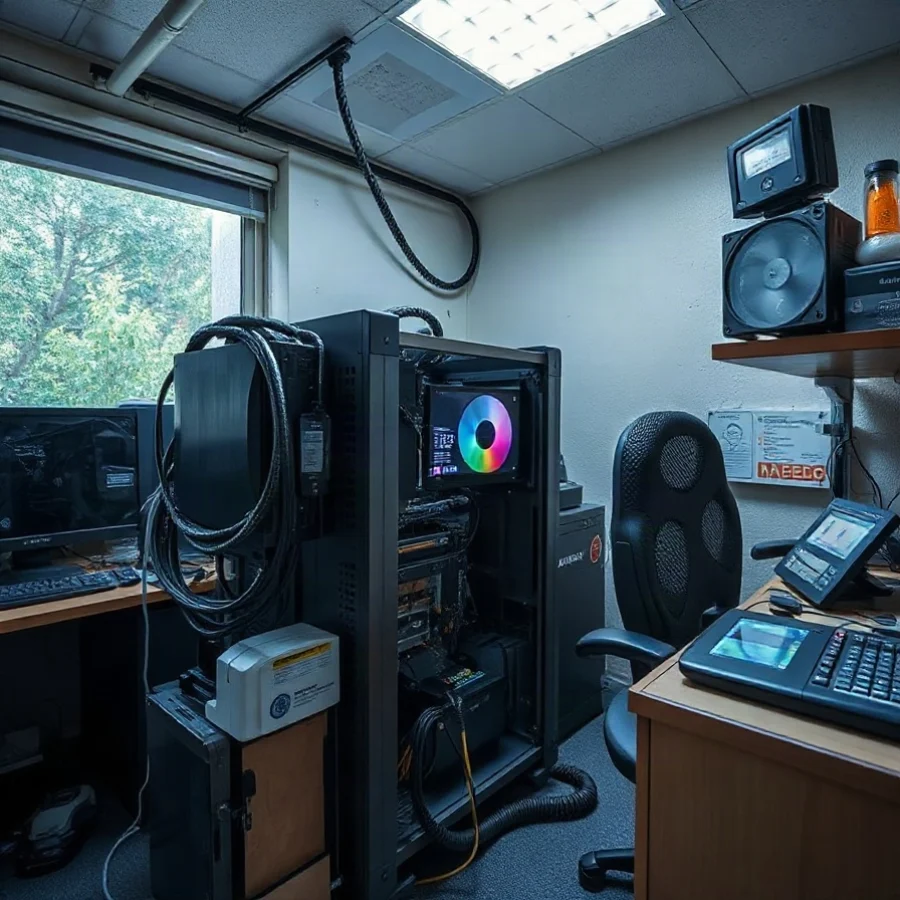
Electricity cost can be estimated with this formula:
Daily electricity cost = power consumption in kilowatts × 24 hours × electricity rate per kilowatt-hour
For example, a machine using 3,000 watts consumes approximately 3 kilowatts. At continuous operation, its estimated daily energy use is 3 × 24, or 72 kilowatt-hours. If the applicable electricity rate is represented by R, the estimated daily electricity cost is 72 × R. This is an educational example rather than a statement about any particular market or utility rate.
Actual power use may differ from the manufacturer's specification. The total can include the mining device, power supply losses, ventilation, cooling, networking equipment, and other supporting systems. A wall-mounted power meter can provide a more useful measurement than a theoretical hardware estimate.
How to Estimate Coins Mined Per Day
Coin output is usually estimated by comparing your miner’s hash rate with the network’s total hash rate or by using the calculation provided by a mining pool. A simplified proportional model is:
Your estimated share of network work = your hash rate ÷ network hash rate
That estimated share can then be applied to the network’s expected daily rewards:
Estimated daily coins = your network share × expected network coins issued per day
This model is only an approximation. Block production is probabilistic, and the network’s total hash rate can change as miners turn equipment on or off. Some networks also account for transaction fees, uncle or orphaned blocks, reward changes, and other protocol-specific details. For practical planning, use a current mining calculator or pool estimator, then compare its assumptions with your own machine’s specifications.
When reviewing an estimate, check whether it uses the correct algorithm, hardware model, hash rate, power draw, network difficulty, coin price, pool fee, and payout method. A calculator that uses outdated data can produce a result that looks precise but is no longer useful.
Gross Revenue Is Not the Same as Profit
Mining websites often display an estimated daily revenue figure before expenses. That number can be useful for comparing machines, but it should not be confused with take-home profit. A machine may generate coins every day while losing money after electricity and other costs are included.
Consider a hypothetical example using symbols rather than live market data:
- Estimated gross revenue: G dollars per day
- Power draw: P kilowatts
- Electricity rate: R dollars per kilowatt-hour
- Pool fee: F dollars per day
- Other operating costs: O dollars per day
The estimated result is:
Net daily profit = G − (P × 24 × R) − F − O
If the result is negative, the operation is running at a daily loss before considering the cost of purchasing the equipment. If the result is positive, that still does not mean the machine has recovered its purchase price. Hardware payback requires a separate calculation.
Mining Revenue and Hardware Payback
To estimate a simple payback period, divide the equipment and setup cost by estimated net profit:
Simple payback period in days = total upfront cost ÷ estimated net daily profit
This formula has important limitations. It assumes that net daily profit remains stable, which is unlikely in a volatile mining market. Difficulty may increase, coin prices may fall, rewards may change, repairs may be necessary, and hardware may lose resale value. If net profit reaches zero or becomes negative, a simple payback period is not meaningful.
A more realistic analysis should model several scenarios instead of relying on one forecast. For example, compare a lower-revenue case, a middle case, and a higher-revenue case. Include downtime, maintenance, replacement parts, cooling, and potential changes in the electricity rate. Even then, the result remains an estimate rather than a promise.
Why Daily Earnings Change So Often
Mining income can change from one day to the next for reasons that are outside an individual miner’s control. Coin prices may move sharply, changing the dollar value of the same number of coins. Network difficulty may adjust as the amount of competing hash rate changes. Transaction fees may be higher or lower depending on network activity, and a pool’s payout calculation may smooth or delay some variation.
Hardware performance can also change. Excessive heat may cause a machine to reduce its speed or shut down. Internet interruptions, power outages, rejected shares, firmware problems, and pool connectivity issues can reduce effective uptime. A theoretical hash rate is therefore different from a machine’s accepted hash rate over a complete day.
Some networks use reward schedules or other protocol parameters that can change at defined events or through network decisions. Verify current information through the network’s official documentation and your mining pool before making operational assumptions.
How Electricity Rates Affect the Break-Even Point
Electricity often determines whether mining is economically viable. Two miners using identical hardware can have very different results if they pay different rates. The calculation should use the actual marginal cost of the electricity used for mining, not a rough household average.
Review your utility bill for the applicable energy rate, fixed charges, time-of-use pricing, demand charges, and taxes or fees. Commercial, residential, hosted, and renewable-energy arrangements may have different terms. Hosting providers may also charge separately for rack space, maintenance, internet access, cooling, and setup.
Do not assume that cheaper electricity automatically produces a better investment. A low rate may come with higher hosting costs, less reliable service, contract obligations, or limited control over the equipment. Compare the complete operating cost and read the terms before committing funds.
Mining Pools, Payouts, and Fees
Solo mining can produce a large reward if a miner finds a block, but the timing is highly uncertain. Mining pools generally provide more regular payouts by combining participants’ work, although the amount and frequency depend on the pool’s payout system and the miner’s contribution.
Pool fees reduce revenue. Other possible deductions may include withdrawal fees, minimum payout thresholds, conversion charges, or hosting fees. These terms are time-sensitive and vary by provider, so verify them directly on the pool or service’s current documentation.
Keep records of gross payouts, fees, electricity expenses, hardware purchases, repairs, and transfers. Tax treatment can depend on your facts, location, business structure, and applicable law. Because rules can change and individual circumstances matter, consult current primary sources and a qualified tax professional rather than relying on a generic online estimate.
Practical Steps for Estimating Daily Mining Profit
- Identify the exact cryptocurrency and mining algorithm your hardware supports.
- Confirm the machine’s measured hash rate and wall power draw.
- Check current network difficulty, expected block rewards, and pool estimates from reliable sources.
- Use a current coin price, while recognizing that the price may change before payout or conversion.
- Enter your actual electricity rate and include cooling or supporting equipment.
- Subtract pool fees, hosting charges, maintenance, and other recurring costs.
- Run multiple scenarios for price, difficulty, uptime, and energy costs.
- Track real payouts and power consumption, then compare them with the original estimate.
For broader planning, you can compare mining assumptions with a crypto profit calculator and review transaction costs with a crypto fee calculator. These tools can help organize assumptions, but they do not remove market risk or guarantee an outcome.
Risks to Consider Before Mining
Mining involves financial, technical, operational, and security risks. Hardware can become obsolete or fail. Noise and heat may make home operation impractical. Mining income may be reported in a different currency than your expenses, creating exposure to price changes. Selling mined coins can also involve exchange spreads, withdrawal costs, custody risks, and account restrictions that should be verified with the relevant provider.
Security matters as much as profitability. Use strong account protection, enable multifactor authentication where available, secure wallet backups, and be cautious with mining software, browser extensions, remote-access tools, and unofficial downloads. Never assume that a mining pool, wallet, hosting company, or investment service is legitimate merely because it advertises high returns.
Mining can be an educational way to understand proof-of-work networks, hardware efficiency, and operating costs. However, it is not a guaranteed-income activity. Before spending money, calculate the break-even point, stress-test the assumptions, and consider whether you could afford a prolonged period of low or negative profitability. The information here is for education, not personalized financial advice.



Comments
0No comments yet. Be the first to share a helpful note or question.
Leave a Comment
Your email address will not be published. Comments are reviewed before appearing on the site.