To calculate crypto mining profit after electricity costs, subtract your total operating expenses from the value of the coins your hardware is expected to mine. The basic formula is: net mining profit = mining revenue − electricity cost − pool fees − other operating costs. Because coin prices, network difficulty, block rewards, payouts, and electricity rates can change, the result is an estimate rather than a guaranteed return.
A useful calculation should separate daily revenue from daily expenses, state every assumption, and show how sensitive the result is to price and network changes. This approach helps you avoid confusing gross mining revenue with actual profit.
The basic crypto mining profit formula
Start with the following calculation:
Net profit per day = gross mining revenue per day − electricity cost per day − pool fees per day − other daily costs
To estimate a longer period:
Net profit for a period = net profit per day × number of days
This simple formula works for an educational estimate, but each input needs to be defined carefully. Gross mining revenue may be shown by a mining pool, mining calculator, or mining software. It can include the expected value of block rewards and transaction fees before deductions. Some services report revenue after pool fees, so check the methodology before using the figure.
How to calculate electricity cost
Electricity is often the largest recurring expense for a mining setup. Use the miner's actual wall power, not only the manufacturer's advertised chip or board consumption. If the device draws 3,000 watts, that is 3 kilowatts.
The formula is:
Electricity cost per day = power consumption in kilowatts × 24 hours × electricity rate per kilowatt-hour
For example, an educational scenario using a 3.0-kilowatt miner and an electricity rate of $0.10 per kilowatt-hour would be:
3.0 × 24 × $0.10 = $7.20 per day
This example is not a current market estimate or a prediction. Replace the assumed rate with the rate on your electricity bill or hosting agreement. Some electricity plans use time-of-use pricing, demand charges, taxes, minimum charges, or different rates by usage tier. If your rate changes during the day, calculate each period separately and add the results.
Include power supply and cooling overhead
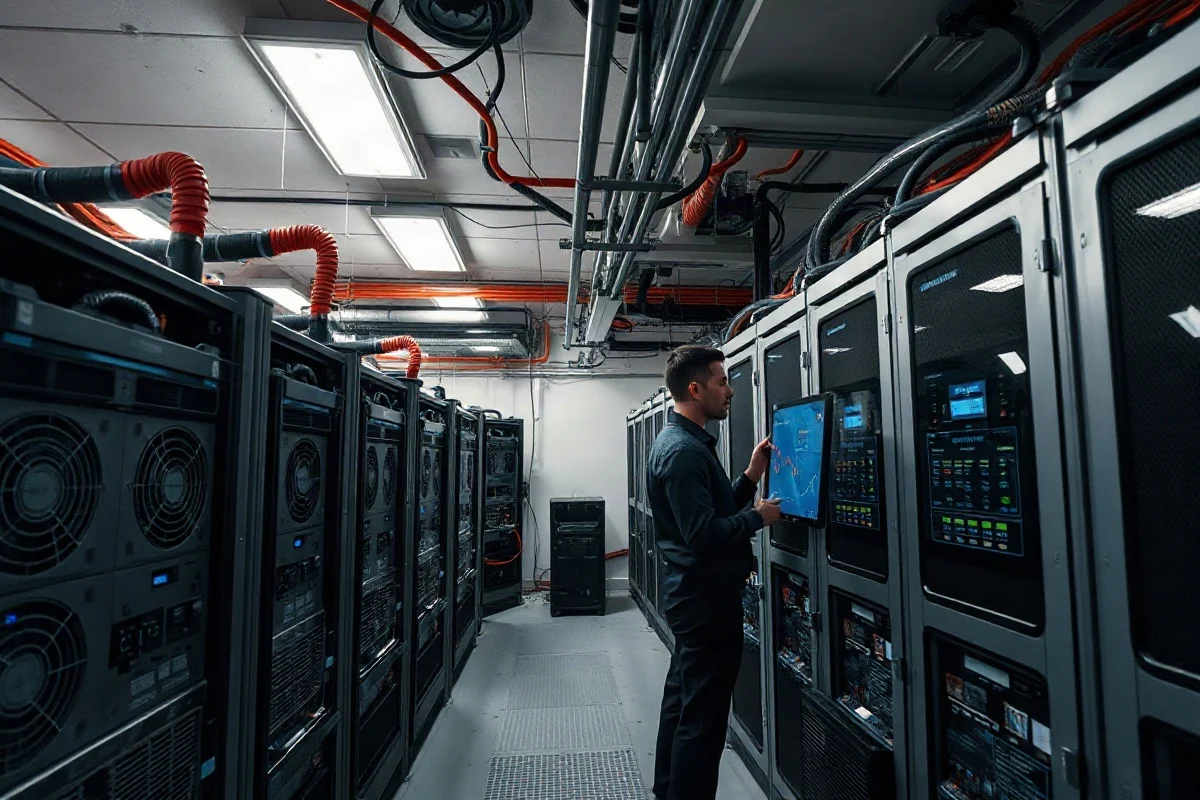
Mining hardware may be rated for a particular power draw, while the wall outlet consumes more because of power supply losses. Cooling equipment, ventilation, networking devices, and monitoring systems also use electricity. A more complete estimate is:
Total facility power = miner power + power supply overhead + cooling and auxiliary power
If a miner uses 3.0 kilowatts and the rest of the setup adds 0.3 kilowatts, calculate electricity cost using 3.3 kilowatts rather than 3.0. Small differences can materially affect a low-margin operation over time.
Estimate mining revenue carefully
Mining revenue depends on several changing variables, including the coin's market price, your hardware's hashrate, network hashrate, network difficulty, block reward structure, transaction fees, pool luck, and uptime. A mining calculator may estimate expected coin production from these inputs, but it cannot guarantee the amount you will receive.
For a simple revenue calculation:
Gross mining revenue = expected coins mined × current coin price
For example, if a model estimates production of 0.001 coins per day and you use an assumed price of $50,000, the gross revenue estimate is $50 per day. The price in this example is hypothetical and should not be treated as a current quote. Verify live prices through a reliable market source before making a time-sensitive calculation. You can compare conversion values with the Криптоконвертер.
Mining revenue is usually more reliable when you record the source, timestamp, coin, algorithm, hardware hashrate, power draw, and fee assumptions. If you compare different calculators, make sure they use the same units and assumptions.
Account for pool fees and payout deductions
Mining pools commonly charge a percentage of mining revenue or use another published fee structure. A percentage-based fee can be estimated as:
Pool fee = gross mining revenue × pool fee percentage
Then:
Revenue after pool fee = gross mining revenue − pool fee
Do not assume that every platform displays fees in the same way. Some estimates may already deduct pool fees, while others may show gross revenue. Payment thresholds, payout fees, rejected shares, and network transaction costs may also affect the amount that reaches your wallet. These terms are time-sensitive and can vary by pool, blockchain, and account configuration, so verify them with the pool's current documentation.
For a broader review of transaction and platform costs, use a Crypto Fee Calculator, but confirm the final fee with the relevant provider before sending funds.
Other costs that affect mining profit
Electricity is important, but it is not the only cost. Include the expenses that apply to your operation, such as:
- Hardware depreciation: Mining equipment can lose value as newer, more efficient models become available.
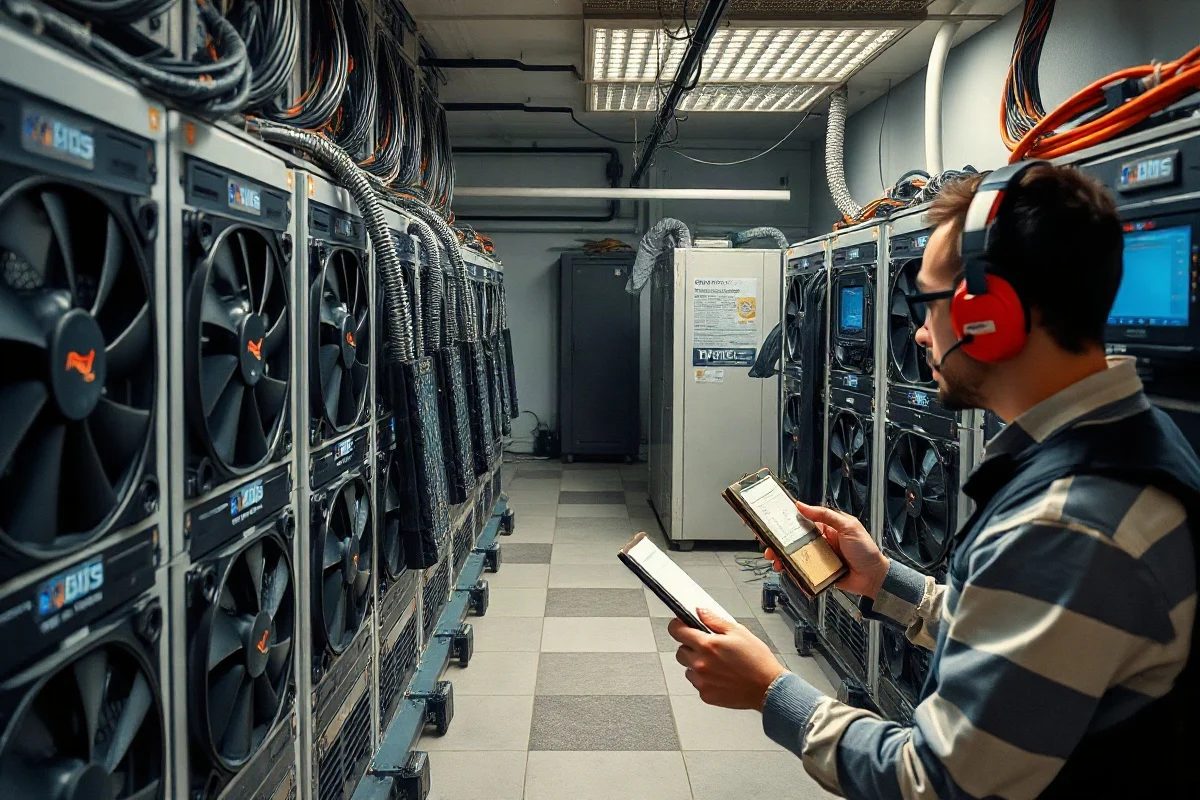
- Repairs and replacement parts: Fans, power supplies, cables, storage devices, and control boards may fail or wear out.
- Cooling and ventilation: Air conditioning, exhaust systems, filters, and additional fans can raise operating costs.
- Hosting: A hosted setup may include electricity, space, maintenance, connectivity, and management fees.
- Internet and monitoring: Connectivity and remote monitoring services may be necessary for reliable operation.
- Простои: Power outages, maintenance, overheating, software problems, and network interruptions reduce actual production.
- Taxes and accounting: Tax treatment depends on your facts and jurisdiction. Obtain current guidance from a qualified professional and verify applicable rules with primary sources.
One way to estimate hardware cost per day is to divide the purchase price by your planned operating life in days. This is an accounting assumption, not a guarantee of resale value or useful life. You can then add the daily hardware allocation to electricity, pool fees, and maintenance reserves.
Worked example with hypothetical assumptions
Consider a fictional setup with these assumptions:
- Wall power: 3.3 kilowatts, including auxiliary equipment
- Тариф на электроэнергию: $0.10 за киловатт-час
- Gross mining revenue: $18 per day
- Pool fee: 2% of gross revenue
- Maintenance reserve: $1 per day
- Hardware allocation: $3 per day
Electricity cost is:
3.3 × 24 × $0.10 = $7.92 per day
The pool fee is:
$18 × 0.02 = $0.36 per day
Estimated net profit is therefore:
$18 − $7.92 − $0.36 − $1 − $3 = $5.72 per day
Again, every number in this example is hypothetical. Actual results could differ because of price movements, difficulty changes, production variance, downtime, fee changes, and operating conditions. If gross revenue falls below the combined costs, the setup operates at a loss even though it is still producing coins.
Calculate the break-even point
Break-even analysis shows the minimum revenue needed to cover costs. If your daily electricity, pool, maintenance, and hardware costs total $12, then gross mining revenue must exceed $12 per day before the setup generates an estimated operating profit.
You can also calculate a break-even electricity rate:
Break-even electricity rate = available daily revenue after non-electricity costs ÷ (total power in kilowatts × 24)
Suppose hypothetical daily revenue after pool fees is $18 and other daily costs are $4. The amount available for electricity is $14. With 3.3 kilowatts of power use, the break-even rate is approximately:
$14 ÷ (3.3 × 24) = about $0.18 per kilowatt-hour
This result changes whenever revenue, power use, fees, or other costs change. It is a planning threshold, not a forecast.
Why mining profitability changes
Mining profitability is dynamic because several variables move at the same time. A higher coin price can increase the dollar value of mined coins, while a lower price can reduce revenue. However, price is only one factor. More miners joining a network can raise competition and reduce the expected share of rewards for a particular device. Protocol changes, reward adjustments, transaction-fee conditions, and changes in network difficulty can also affect production.
Hardware efficiency matters as well. Two miners with similar hashrate may have different power consumption. The more efficient device may have a lower electricity cost per unit of computing power, although its purchase price and availability may differ. Consider both operating efficiency and total ownership cost instead of focusing only on advertised hashrate.
For market context, you can review the site's Mining resources, but verify current network data with the relevant blockchain explorer, mining pool, hardware manufacturer, or protocol documentation.
Practical steps for a more realistic estimate
- Measure wall power with a suitable meter rather than relying only on a specification sheet.
- Use the actual electricity rate, including applicable tiers, taxes, and additional charges.
- Record whether the revenue estimate is gross or already reduced by pool fees.
- Use a conservative uptime assumption instead of assuming the equipment runs continuously.
- Set aside a maintenance and replacement reserve.
- Run low, middle, and high price scenarios rather than relying on one price.
- Recalculate when network difficulty, reward conditions, electricity rates, or pool terms change.
- Keep records of purchases, operating expenses, payouts, and dates for accounting purposes.
A spreadsheet can make this process easier. Useful columns include date, coin, hashrate, wall power, electricity rate, expected coins, actual coins, coin price, pool fee, downtime, maintenance, and net result. Comparing expected production with actual payouts can reveal whether the calculator's assumptions match your setup.
Risks and limitations to understand
A profitability estimate is not a promise that mining will recover hardware costs or produce a positive return. Coin prices can move sharply, and converting mined coins into dollars may involve additional costs or timing differences. Network conditions can change without matching your original forecast. Hardware can fail, and a home setup may create heat, noise, electrical, or fire-safety concerns.
Mining also involves operational and security risks. Use strong account security, protect wallet credentials, verify software downloads, and avoid sending funds based on unsolicited messages. For broader guidance, review Кошельки и безопасность.
The figures in this article are for education only and are not personalized financial, tax, legal, or investment advice. Before purchasing equipment or signing a hosting agreement, verify current prices, electricity terms, pool fees, network data, and applicable obligations from primary sources. A careful calculation cannot remove volatility, but it can make the assumptions and potential costs easier to evaluate.
Comments
0No comments yet. Be the first to share a helpful note or question.
Leave a Comment
Your email address will not be published. Comments are reviewed before appearing on the site.