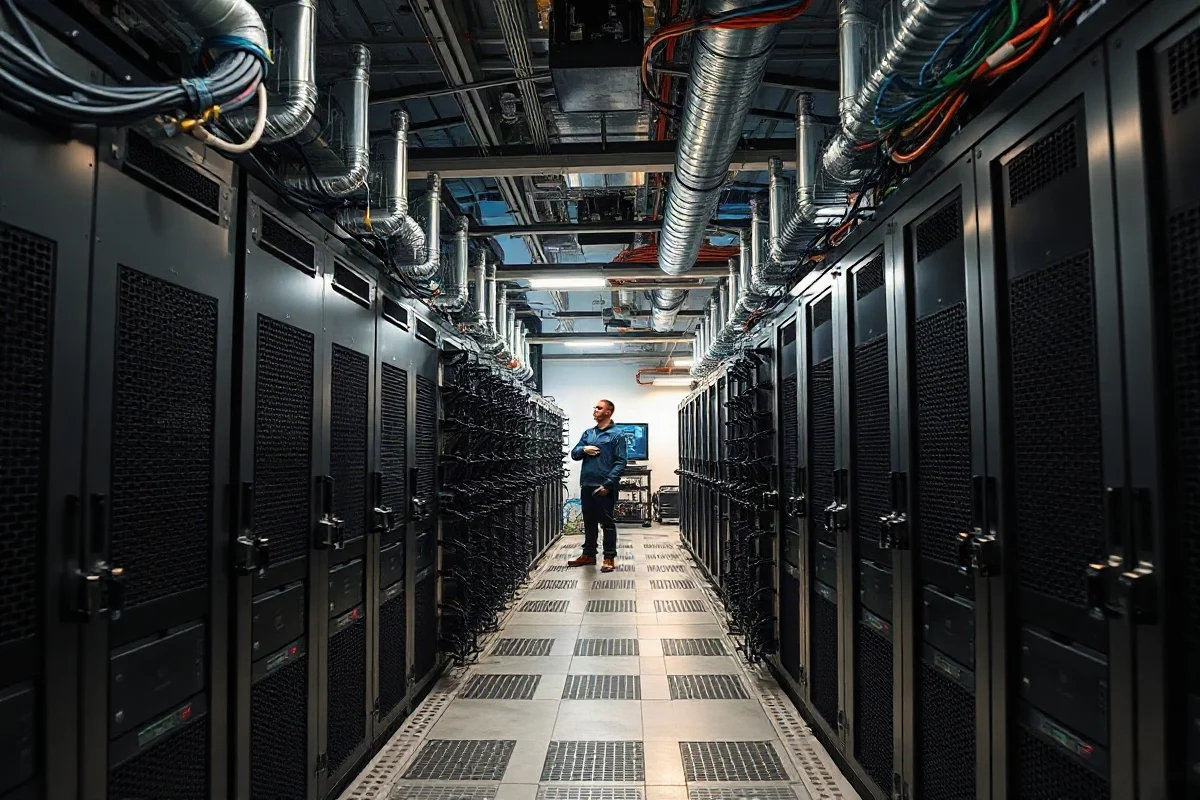
Bitcoin mining is profitable only when the value of the Bitcoin a miner earns exceeds the full cost of producing it. The main variables are Bitcoin’s market price, network difficulty, block subsidy, transaction-fee revenue, mining hardware efficiency, electricity rates, uptime, pool fees, cooling, facility costs, and hardware financing. Because several of these inputs change over time, mining profitability is a moving calculation rather than a permanent feature of any machine or location.
This article explains how to evaluate those variables, build a realistic mining profit estimate, and identify the conditions that can turn an apparently profitable operation into a loss. The examples are educational illustrations, not forecasts or personalized financial advice.
The basic Bitcoin mining profit formula
A practical estimate starts with revenue and subtracts every relevant expense:
Net profit = mining revenue − electricity cost − pool fees − operating costs − hardware cost allocation

Mining revenue can be estimated with this simplified formula:
Expected BTC earned = miner hashrate ÷ network hashrate × Bitcoin issued during the period
Then convert the expected Bitcoin into the currency used for your budget:
Mining revenue = expected BTC earned × Bitcoin price
In a pool, the result should be adjusted for the pool’s fee and any other deductions:
Net mining revenue = gross mining revenue × (1 − pool fee rate)
These formulas are simplified. Actual results can differ because Bitcoin production is probabilistic, network conditions change, transaction fees vary, and miners may experience downtime or rejected shares. A solo miner also faces much greater payout variability than a miner who contributes hashrate to a pool.
The variables that determine profitability
Bitcoin’s market price
The Bitcoin price directly affects the value of mining revenue. If a miner produces the same amount of Bitcoin but the market price falls, revenue measured in dollars also falls. A rising price can improve the revenue side of the calculation, but it does not automatically make mining profitable. Electricity costs, network competition, hardware expenses, and operational problems may still exceed income.
Bitcoin prices are time-sensitive and can move substantially. Use a current market source when modeling a real operation rather than relying on a number from an older article or an unverified estimate. For a broader view of price data and related tools, visit our Bitcoin page.
Network hashrate and mining difficulty
Your share of the network’s computing power determines your expected share of block rewards. If your machine’s hashrate stays constant while total network hashrate rises, your expected share generally becomes smaller. This can reduce the amount of Bitcoin produced per unit of hardware.
Bitcoin’s difficulty adjustment is designed to help regulate how quickly blocks are added to the blockchain. Difficulty is not a fixed business assumption. It changes as network conditions change, so a profitability estimate should test multiple difficulty scenarios rather than treating today’s result as a long-term guarantee.
Block subsidies and transaction fees
Miners receive compensation through the block subsidy and transaction fees included in the blocks they help produce. The subsidy is governed by Bitcoin’s protocol and changes over time according to its issuance schedule. Transaction-fee revenue can also vary with network demand.
A conservative model should separate these revenue sources and avoid assuming that unusually high fee activity will continue indefinitely. Protocol details and network conditions are time-sensitive, so verify current information with reliable primary sources before making a purchase or operating decision.
Electricity cost
Electricity is often the most important controllable operating expense. A miner that consumes power continuously can accumulate a substantial bill even when the machine is not generating a profit.
The electricity formula is:
Electricity cost = power consumption in kilowatts × operating hours × electricity rate
For continuous operation, operating hours are commonly estimated from the period being analyzed, but the actual result depends on uptime. The electricity rate should include the applicable energy charge and any relevant demand charges, taxes, delivery fees, or facility markups. Do not assume that a residential rate, commercial rate, or advertised headline rate represents the final amount on your bill.
For example, suppose a hypothetical miner uses 3.2 kilowatts, operates for 720 hours in a month, and pays $0.08 per kilowatt-hour. Its estimated energy use would be:
3.2 × 720 = 2,304 kilowatt-hours
The estimated energy cost would be:
2,304 × $0.08 = $184.32
This example excludes cooling, network equipment, demand charges, downtime, and other costs. It demonstrates the method only; it does not represent a typical or recommended rate.
Hardware efficiency and purchase cost
Two machines with similar hashrates may have very different power consumption. Efficiency is commonly expressed as joules per terahash, or J/TH. A lower energy requirement for the same computing output can improve the operating margin, especially in a facility with expensive electricity.
Purchase price also matters. Hardware should not be treated as free simply because it has already been bought. To measure economic performance, allocate its cost over an estimated useful operating period:
Hardware cost allocation per period = purchase cost − expected resale value ÷ expected operating periods
In practice, the calculation should be written with clear parentheses:
Hardware cost allocation = (purchase cost − expected resale value) ÷ expected operating periods
Resale value is uncertain. Older hardware may lose value when newer, more efficient machines enter the market, and a malfunctioning machine may be worth much less than a working one. Shipping, import charges, repairs, replacement power supplies, and installation should also be considered.
Pool fees and payout structure
Mining pools generally charge a fee or apply a payout structure that affects the amount a participant receives. The fee may be calculated in different ways, and payout timing or minimums can affect cash flow.
Read the current pool terms before using them in a model. Do not assume that a low advertised fee is the only cost. Compare the fee method, payout rules, server reliability, accounting practices, and historical uptime. Pool policies can change, so verify them directly with the pool.
Cooling, maintenance, and facility expenses
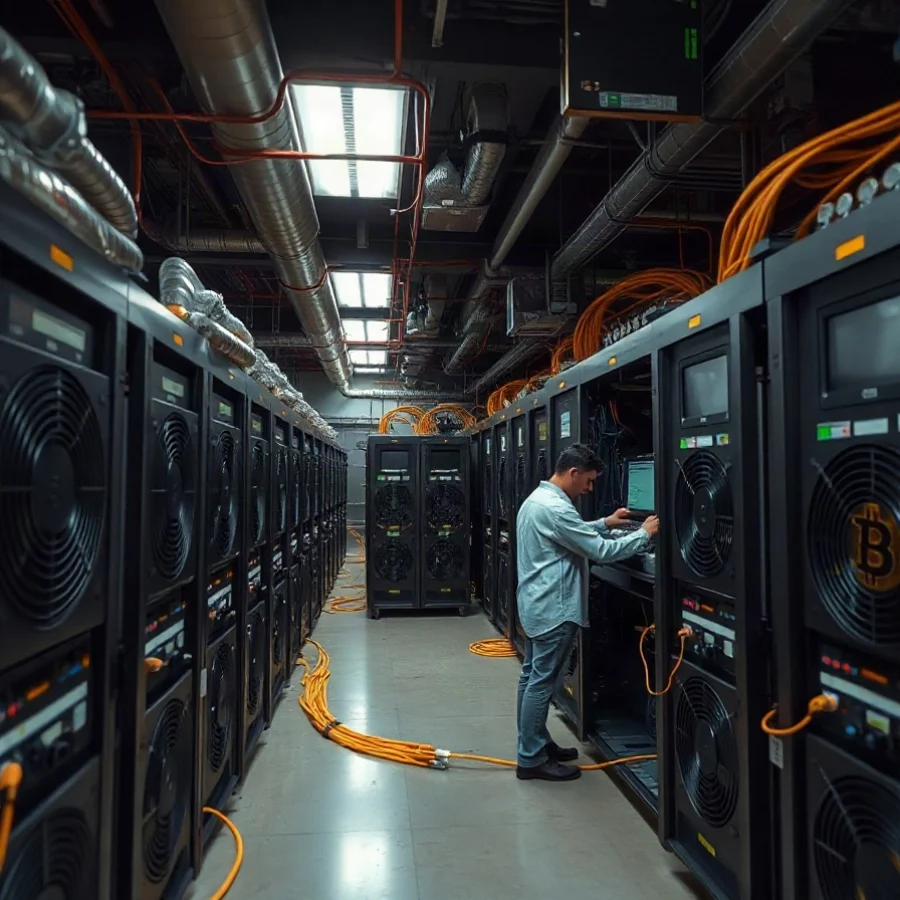
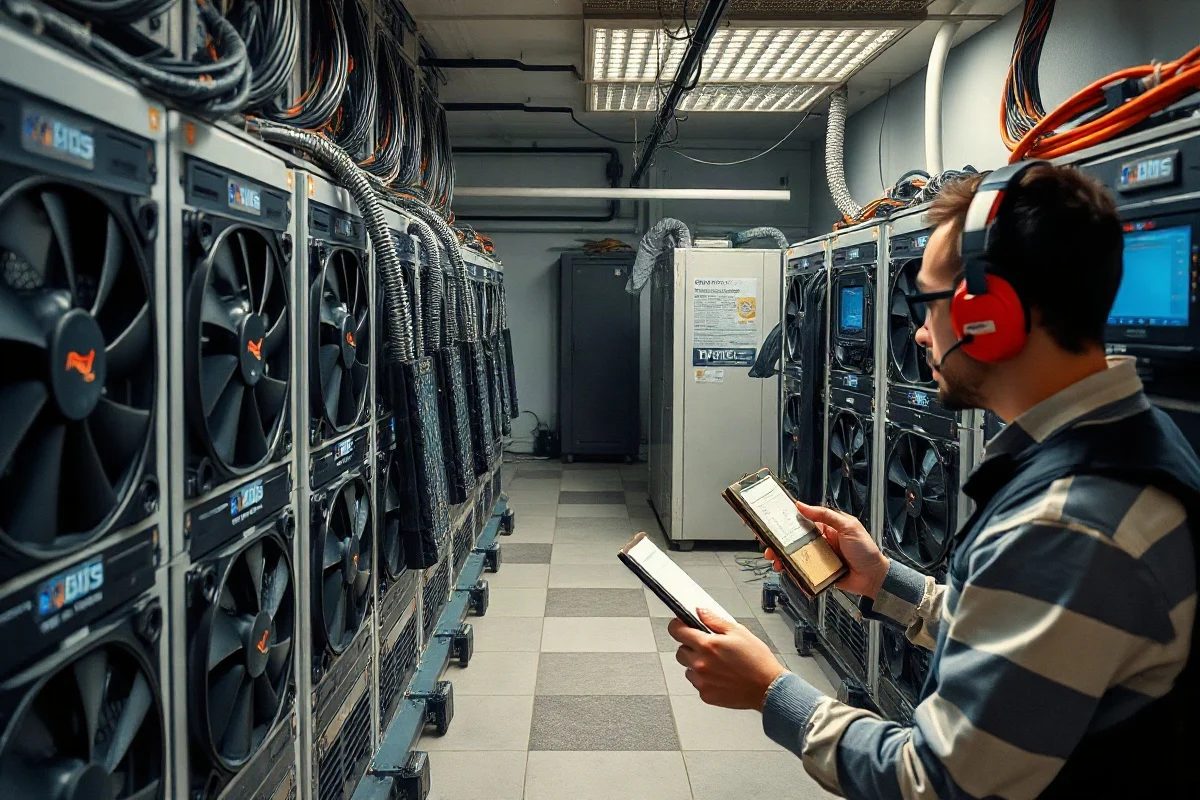
Mining hardware converts a large amount of electricity into heat and noise. A facility may need ventilation, air conditioning, immersion cooling, electrical upgrades, monitoring systems, fire protection, and physical security. These systems consume power and require maintenance.
Other expenses may include internet service, rent, labor, insurance, cleaning, replacement fans, cables, circuit breakers, software, and accounting. A home setup may have fewer formal overhead costs but can create heat, noise, electrical, and safety concerns. The absence of a separate invoice does not mean an expense has no economic value.
A hypothetical profitability example
Consider a fictional one-month model with clearly stated assumptions:
- Gross mining revenue: $500
- Pool fee and payout deductions: $15
- Electricity cost: $184.32
- Cooling and facility costs: $75
- Maintenance reserve: $25
- Hardware cost allocation: $150
The estimated net result would be:
$500 − $15 − $184.32 − $75 − $25 − $150 = $50.68
Under those assumptions, the model shows a positive result of $50.68 for the period. That number is not a promised return. If the Bitcoin price declines, network difficulty rises, the machine goes offline, or the electricity bill is higher than expected, the result could become negative. The example also excludes taxes, financing interest, unexpected repairs, and the opportunity cost of the money used to purchase the hardware.
A useful break-even test asks how much revenue is required to cover costs:
Break-even mining revenue = electricity + pool fees + operating costs + hardware cost allocation
In the example, break-even revenue would be $449.32. A miner can then test whether a range of possible Bitcoin prices, difficulty levels, and uptime assumptions produces revenue above or below that threshold.
Why a mining calculator can be misleading
Mining calculators are useful for comparing assumptions, but the output is only as reliable as the inputs. A calculator may display an attractive daily figure while excluding hardware depreciation, cooling, downtime, pool fees, or local electricity charges.
Before trusting a result, check whether it includes:
- Current hashrate and power consumption for the exact machine model
- A current network difficulty or network hashrate assumption
- The applicable Bitcoin price and currency conversion
- Block subsidy and transaction-fee assumptions
- Pool fees and payout deductions
- Actual electricity and demand charges
- Cooling, rent, labor, repairs, and internet costs
- Hardware purchase price and depreciation
- Expected uptime and maintenance interruptions
You can compare revenue and cost assumptions with a kripto kâr hesaplayıcısı, then use a kripto ücret hesaplayıcısı to examine how transaction or platform fees affect a broader crypto operation. These tools do not remove uncertainty, so review each input and update time-sensitive values before relying on the result.
Scenario analysis is more useful than a single estimate
Instead of asking whether a miner is profitable today, model several scenarios. A basic analysis might include a low-price case, a middle case, and a high-price case. You can also test higher network difficulty, lower uptime, increased electricity costs, and an unexpected repair.
Important outputs include:
- Net profit or loss per day, month, and year
- Break-even Bitcoin price
- Break-even electricity rate
- Payback period for the hardware
- Profit sensitivity to network difficulty
- Cash-flow requirements during unprofitable periods
Payback period deserves special caution. A simple version is:
Payback period = hardware cost ÷ estimated periodic net profit
This estimate becomes unreliable when net profit changes, turns negative, or depends on an unusually favorable market condition. It also does not account for the time value of money or the possibility that equipment becomes obsolete before the calculated payback date.
Risks beyond the spreadsheet
Mining involves operational and financial risks that may not appear in a basic calculator. Hardware can fail, facilities can lose power, internet service can be interrupted, and cooling systems can malfunction. A prolonged outage can reduce production while fixed expenses continue.
There are also security risks. Mining accounts, wallets, payout addresses, and remote management systems should be protected with strong authentication and careful access controls. Avoid downloading mining software from unverified sources, and review wallet and account security practices in our Cüzdanlar ve Güvenlik bölümünü inceleyebilirsiniz.
Legal, tax, utility, zoning, and environmental requirements can vary by jurisdiction and may change. This article does not provide legal or tax advice. Verify current requirements with the relevant government agency, utility provider, and a qualified professional familiar with your situation.
How to evaluate a mining opportunity
- Identify the exact hardware. Confirm its hashrate, power draw, efficiency, purchase price, warranty, and expected availability.
- Use your real electricity cost. Review a recent bill and include applicable delivery, demand, facility, and tax charges.
- Estimate realistic uptime. Account for maintenance, restarts, repairs, and power interruptions.
- Include all operating expenses. Add pool fees, cooling, rent, labor, internet, repairs, and monitoring.
- Model hardware depreciation. Consider resale value and the risk of technological obsolescence.
- Run multiple scenarios. Test changes in Bitcoin price, network difficulty, fees, and downtime.
- Set a review schedule. Update assumptions when market data, pool terms, electricity rates, or hardware conditions change.
Son değerlendirme
Bitcoin mining becomes economically attractive only when its expected revenue consistently exceeds its complete cost structure under realistic assumptions. Cheap and reliable electricity, efficient hardware, high uptime, disciplined operations, and favorable market conditions can improve the outlook, but none guarantees a profit.
The most responsible approach is to treat mining as a high-volatility operating business. Calculate a break-even point, stress-test unfavorable conditions, preserve enough cash for repairs and weak periods, and verify current market, protocol, utility, legal, and tax information before committing capital.
Comments
0No comments yet. Be the first to share a helpful note or question.
Leave a Comment
Your email address will not be published. Comments are reviewed before appearing on the site.