
Hash rate measures how much computational work a mining device or network performs each second. A higher hash rate can improve a miner’s chance of earning block rewards, but it does not guarantee profit. Actual mining earnings also depend on network difficulty, the miner’s share of total computing power, electricity costs, hardware efficiency, pool fees, transaction fees, coin prices, and protocol changes. Hash rate is therefore an important input in a mining estimate, not a complete profitability measure.
What hash rate means
Proof-of-work mining uses specialized computers to search for a valid solution to a cryptographic puzzle. Each attempted solution is commonly called a hash. Hash rate is the number of hashes a machine or group of machines can calculate in a given period.
Hash rate is usually expressed with metric prefixes:
- H/s: hashes per second
- kH/s: thousands of hashes per second
- MH/s: millions of hashes per second
- GH/s: billions of hashes per second
- TH/s: trillions of hashes per second
- PH/s: quadrillions of hashes per second
- EH/s: quintillions of hashes per second
A mining device’s advertised hash rate is a performance rating under particular operating conditions. Real-world results can vary because of temperature, software settings, power limits, hardware aging, rejected shares, network connectivity, and maintenance interruptions. The network hash rate is the combined estimated computing power of all active miners on a proof-of-work network.
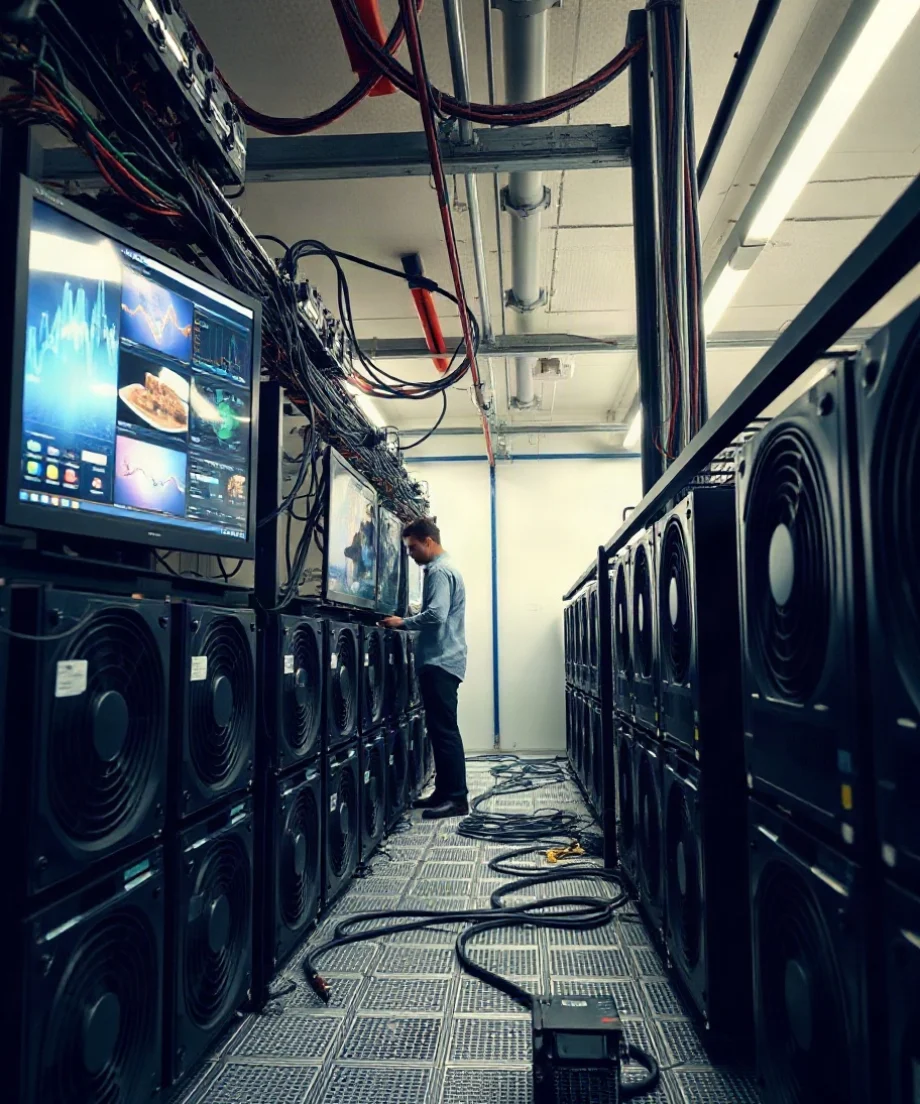
Why hash rate affects mining earnings
Mining rewards are distributed through a competition. A miner with more hash rate performs more attempts and generally has a larger probability of finding the next valid block than a miner with less hash rate. In a mining pool, the same principle applies: the miner contributes computing work and receives a share of the pool’s expected rewards according to the work submitted, subject to the pool’s payout system and fees.
A useful simplified relationship is:
Expected gross reward share ≈ Miner hash rate ÷ Network hash rate × Network rewards during the period
This is an educational approximation, not a guaranteed payout. Block discovery is probabilistic. A miner may find a block earlier or later than a long-term average would suggest. Pool payouts can make income more regular, but they do not remove market, operational, or protocol risk.

Network rewards may include newly issued coins and transaction fees, depending on the network and the block reward structure. Some networks change issuance schedules or reward rules over time. Always verify current protocol details through reliable primary documentation before using them in a calculation.
The role of network difficulty
Network difficulty adjusts the challenge miners face. On networks designed to maintain a target block interval, difficulty can respond to changes in total mining activity. When more miners join and network hash rate rises, difficulty may increase. When miners leave, difficulty may decrease after the network’s adjustment process.
This creates an important distinction:
- More device hash rate: can increase your expected share of mining work.
- More network hash rate: can increase competition and may reduce an individual machine’s share if its performance stays unchanged.
- Higher difficulty: generally means that the same hardware has a lower expected reward rate, all else being equal.
Difficulty is time-sensitive. A profitability estimate based on yesterday’s difficulty can become outdated as new hardware comes online, existing machines shut down, or network conditions change.
A practical mining earnings formula
For a basic estimate, calculate expected gross revenue first and then subtract operating costs:
Estimated net result = Gross mining revenue − Electricity cost − Pool fees − Other operating costs
Chi phí điện có thể được ước tính bằng công thức này:
Chi phí điện = Công suất tiêu thụ tính bằng kilowatt × Số giờ vận hành × Giá điện
For example, suppose a machine uses 3.2 kilowatts continuously, operates for 24 hours, and the applicable electricity rate is represented by R dollars per kilowatt-hour. Its daily electricity cost would be:
3.2 × 24 × R = 76.8R
This example intentionally leaves the electricity rate as a variable because rates differ by location, contract, demand charges, taxes, and time of use. A mining estimate should use the rate shown on your current utility bill or hosting agreement rather than a generic online figure.
If gross daily mining revenue is represented by G and daily pool fees and other costs total C, the estimated daily result is:
G − 76.8R − C
The formula is simple, but the inputs are not fixed. Coin prices, network difficulty, block rewards, transaction fees, pool policies, uptime, and electricity rates can all change. Use ranges or scenarios instead of treating one estimate as a promise.
Hash rate is not the same as efficiency
Two machines can produce similar hash rates while consuming very different amounts of electricity. Mining efficiency is often expressed as energy used per unit of computational work, such as joules per terahash for certain application-specific integrated circuit miners.
Lower energy use per unit of hash rate can improve a machine’s position when electricity is a major expense. However, efficiency is only one part of the decision. Purchase price, shipping, installation, cooling, repair requirements, expected useful life, resale value, and the algorithm supported by the hardware also matter.
A high-hash-rate machine with poor efficiency may produce more gross revenue but less net income than a lower-hash-rate machine with better power consumption. Compare machines using both performance and operating cost.
Gross revenue versus net mining profit
Mining websites and dashboards sometimes display expected coin production or gross revenue. These figures should not be confused with profit. Net results require subtracting every relevant cost.
Common costs to include
- Electricity and demand-related charges
- Phí mining pool
- Hardware purchase and depreciation
- Cooling, ventilation, and facility costs
- Internet service and monitoring equipment
- Repairs, replacement parts, and downtime
- Hosting, rent, or colocation charges
- Withdrawal or conversion fees
- Any applicable accounting or tax-related costs
Tax treatment varies by jurisdiction and personal circumstances, so do not assume that mining revenue or expenses receive a particular treatment without checking current guidance and consulting a qualified professional. Laws and administrative rules can change.
How coin price changes the result
Mining rewards are often received in the network’s native asset. If the market price rises, the dollar value of a fixed coin payout may increase. If the price falls, the same coin amount may be worth less. This creates market exposure even when a machine’s hash rate and electricity consumption remain unchanged.
Price estimates are especially sensitive because miners may pay operating expenses in fiat currency while receiving revenue in a volatile digital asset. A break-even price can be calculated as an educational scenario:
Break-even coin price = Total operating cost during the period ÷ Coins mined during the period
This calculation does not predict the future price. It only shows the price at which the selected assumptions would cover the selected costs. It also excludes opportunity costs and unexpected repairs unless you include them.
Pool mining and solo mining
Solo mining means attempting to find blocks independently. It may produce a large payout if a block is found, but the timing can be highly uncertain, especially for a small miner relative to the network. Pool mining combines participants’ hash rate and typically distributes rewards according to submitted work and the pool’s payout method.
Pool mining can reduce payout volatility, but pool fees, minimum withdrawal thresholds, payout rules, custody practices, and server reliability matter. Review the pool’s current documentation before connecting hardware or sending funds. A pool’s displayed estimate is not an assurance of future income.
How to use a mining profitability calculator
A mining calculator can help organize assumptions, but the quality of the result depends on the inputs. Start with the device’s measured or manufacturer-rated hash rate and power draw. Then verify the mining algorithm, network difficulty, block reward assumptions, current coin price, pool fee, and electricity rate.
For a more realistic analysis, run several scenarios:
- Kịch bản cơ sở: your best-supported current assumptions
- Trường hợp giá thấp: a weaker coin-price scenario
- Higher-difficulty case: increased network competition
- Higher-cost case: a less favorable electricity or hosting rate
- Downtime case: reduced operating hours for maintenance or outages
Compare results over daily, monthly, and longer periods, but remember that longer projections compound uncertainty. You can review related tools and educational resources through Crypto Profit Calculators’ mining section. For broader revenue and cost scenarios, the Công cụ tính lợi nhuận tiền mã hóa can help structure assumptions, while the Máy tính phí Crypto may help isolate transaction-related costs.
Important risks miners should evaluate
Mining hardware can become less competitive when more efficient equipment enters the market. A machine can also lose value if the supported algorithm becomes less profitable or if network rules change. Heat, noise, dust, unstable power, and inadequate ventilation can shorten equipment life and create safety concerns.
Operational security matters as well. Use reputable software, protect account credentials, enable appropriate security controls, and verify wallet addresses before withdrawals. Mining-related scams may promise fixed returns, guaranteed payouts, or unusually fast payback periods. Those claims should be treated with skepticism.
Before purchasing equipment, consider whether you can absorb periods of low or negative cash flow. Do not rely on a single price forecast or assume that historical mining conditions will continue. This article is educational and does not provide personalized investment, business, or tax advice.
A practical checklist before starting
- Confirm that the hardware supports the intended proof-of-work algorithm.
- Measure or verify hash rate and power draw under realistic settings.
- Use your actual electricity or hosting rate.
- Check current network difficulty, reward rules, and pool terms.
- Include cooling, downtime, maintenance, and hardware costs.
- Model multiple coin-price and difficulty scenarios.
- Review local legal, tax, utility, and property requirements with current primary sources or qualified professionals.
- Decide how rewards will be stored and secure the associated accounts and wallets.
Hash rate is the starting point for understanding a miner’s potential share of proof-of-work rewards. It becomes useful only when paired with efficiency, network conditions, electricity costs, fees, uptime, and realistic market scenarios. Treat every calculator output as an estimate, update time-sensitive inputs regularly, and focus on net results rather than headline hash rate alone.



Comments
0No comments yet. Be the first to share a helpful note or question.
Leave a Comment
Your email address will not be published. Comments are reviewed before appearing on the site.